RSS Feed

Category Archives: Culinary Techniques

Sweet and Spicy Pork over Smashed Sweet Potatoes

Posted on

Anyone else inherit the same paranoia about undercooked pork that I did? Do you find yourself perpetually overcooking your pork until it practically crumbles and barely resembles meat? You’re not alone. Overcooking pork is a common practice, stemming from the fear instilled in us by our well-intentioned elders, who warned us never to mess around with undercooked pork. Fearing for our lives and horrified at the thought of contracting some miserable illness, we did as we were told and cooked that pork to a dry 170 degrees.

Turns out that nowadays, Trichinella (the parasite of concern in pork) is not so much a problem as it once was. Improved sanitation standards and pig diets have resulted in a much safer pork quality. Furthermore, trichinella is actually killed at a temperature which is much lower than 170 degrees. There’s really no reason to cook your pork to death.

Wouldn’t you rather enjoy a juicy pork chop instead of something akin to cardboard? Well, you’re in luck! Recently, the USDA officially lowered it’s recommended minimum temperature for pork. You can now rest at ease with cooking your pork to a minimum temperature of 145 degrees. Add a recommended three minute rest time for a little carryover cooking and to let the juices redistribute and you’ll have yourself a delicious, juicy piece of pork. (Click here for more information on the USDA’s revised recommendations.)

It’s now easier than ever to remember the safe cooking temperatures for all types of meat. Just three numbers to remember for safe, delicious meat! Pork, beef, lamb, and other whole cuts of meat all have a minimum recommended temperature of 145 degrees. The recommendation for poultry remains unchanged at a minimum cooked temperature of 165 degrees. Ground meats maintain a minimum recommended cooked temperature of 160 degrees. (See my summertime safety note below the recipe.)

The best way to measure the temperature of any meat is with an instant-read meat thermometer, inserted into the thickest part of the meat. If you don’t already own a good thermometer, get yourself one. It is, without a doubt, one of the most useful kitchen tools you’ll own.
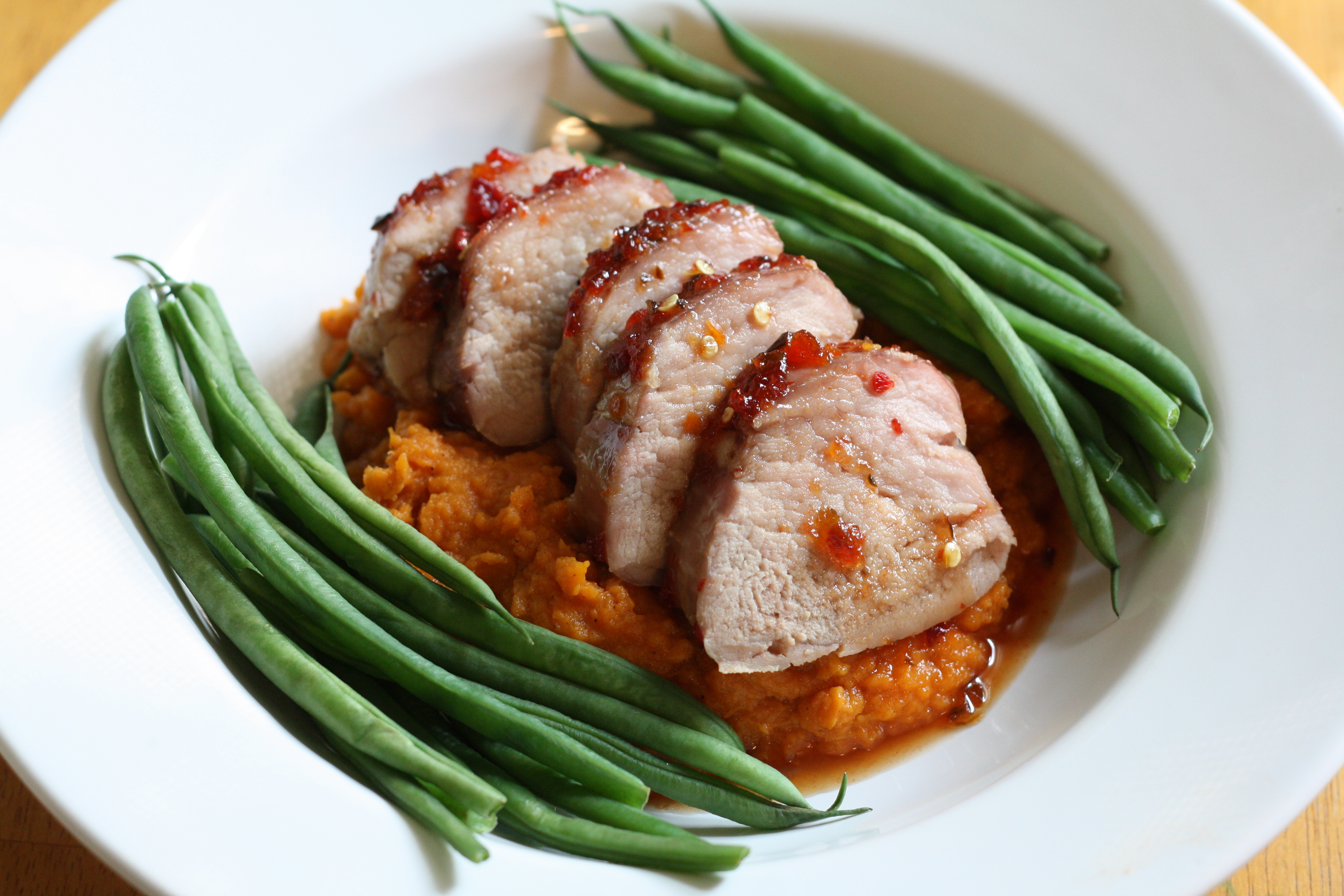
I’ve got just the thing to celebrate the new, lowered safe temperature recommendation for cooked pork; a lean pork tenderloin glazed with a sweet and spicy sauce made of honey and sambal oelek (ground chili paste). Check in the international section of your grocery store for the sambal oelek. If you’re unable to find it, a ground chipotle pepper (from a can of chipotles in adobo) would make a good substitute. Our perfectly cooked tenderloin will be served atop a mound of lightly spiced, smashed sweet potatoes and drizzled with a bit of the honey sauce.

Sweet and Spicy Pork Tenderloin

Ingredients

  • 1 1-pound pork tenderloin
  • 1/4 cup honey
  • 2 tablespoons sambal oelek
  • Salt

Directions

Preheat oven to 375 degrees.

Remove any excess fat or silver skin from the pork tenderloin. Place the tenderloin on a baking dish. Season with salt.

In a bowl, combine the honey and sambal oelek until well blended. Pour about half of the mixture over the tenderloin. Place the tenderloin in the oven and cook for about 25 minutes, until it has reached an internal temperature of at least 145 degrees. Halfway through the cooking time, pour the remainder of the honey mixture over the tenderloin. Allow to rest for 3 minutes before slicing.

Serve over smashed sweet potatoes. Drizzle with excess honey sauce from the baking dish.

Serves 2-4

For the sweet potatoes: Place 2 large sweet potatoes on a baking sheet. Bake in a 375 degrees oven for about an hour, until very tender. Split the potatoes in half and scoop out the tender insides. Smash the potato with 3 tablespoons of butter and about 1/2 teaspoon of cinnamon, until as smooth as desired.

**Semi-unrelated Summertime Safety Note**

The recommended minimum temperature of 160 degrees for ground meats includes burgers, despite some people’s preferences for a more rare-cooked burger. The higher recommended temperature for ground meat (as compared to whole cuts of meat) is due to the nature of the product. Whereas bacteria exists mainly on the surface of whole meats, which enables it to be fully killed during the cooking process, bacteria in ground meat has the potential to be spread throughout the entire product. If you prefer your burgers on the rare side, your best bet is to purchase the highest quality meat from a trusted source and grind it in your own, impeccably clean meat grinder.  Irradiated beef, which has been exposed to radiation in order to kill bacteria and parasites is another option for rare-cooked burgers, though personally, the idea of irradiated meat doesn’t sit well with me. I’d much rather just cook my burgers to the recommended safe temperature. Using a ground beef with a higher fat content (80/20) is the best way to maintain a well-cooked, juicy burger.


How to Prepare Fresh Pumpkin Puree

When it comes to Thanksgiving desserts, does it get any more classic than pumpkin pie?? Pumpkin is the bright orange star of autumn produce. They play a leading role in Halloween celebrations and an even tastier role at Thanksgiving. As far as I’m concerned, serve whatever other desserts you’d like on Thanksgiving, as long as there’s at least one pumpkin pie. So, in honor of our Thanksgiving Week here at The Gourmand Mom, we’ll be making a pumpkin pie, using my mom’s tasty recipe for Fresh Pumpkin Coconut Pie.

Like many families, we purchased several pumpkins to adorn our front steps throughout October. They lasted out there for a month, until one afternoon, we opened the door to find the remnants of what used to be the Frankenstein pumpkin. We were all a bit flummoxed upon finding the remains. The boys were devastated. What horrific event could have caused the brutal destruction of our little pumpkin; so thoroughly ravaged on our front steps. We all felt a bit violated. But, my husband dutifully cleaned up the remains and we did our best to put the past behind us. And then, the very next day, the vicious pumpkin villian returned.
Let’s just call him Squirrely. Squirrely stood there on our front steps, staring at me with his beady little eyes, looking all cute with his fluffy tail. And then he strutted himself over to the next largest pumpkin, and shamelessly went to work. So strong was his passion for pumpkin, that he worked diligently at his task for at least an hour, as we all stood staring in awe. Squirrely was clearly a master of pumpkin. To his credit, he waited a month before devouring our decor.

Clearly, I wouldn’t be using any of those pumpkins to make my pumpkin pie. Luckily, our grocery store is well-stocked with pumpkins. For the purpose of making pumpkin puree for pies or other pumpkin desserts, your best bet is to pick up a Pie Pumpkin or Sugar Pumpkin. They are smaller and will produce a less watery, more flavorful result. When my mom prepares the pumpkin for her pies, she typically prepares the puree in a similar fashion to mashed potatoes. She cuts the pumpkin into chunks, removes the skin, boils, then mashes. It’s a technique which has always worked well for her. However, an easier alternative to chopping a hard pumpkin into pieces and removing all of the skin is to roast the pumpkins. Once roasted, the tender insides will scoop out with ease. Here is a step by step guide on how to prepare fresh pumpkin puree by roasting.
1. Thoroughly rinse the pumpkins.

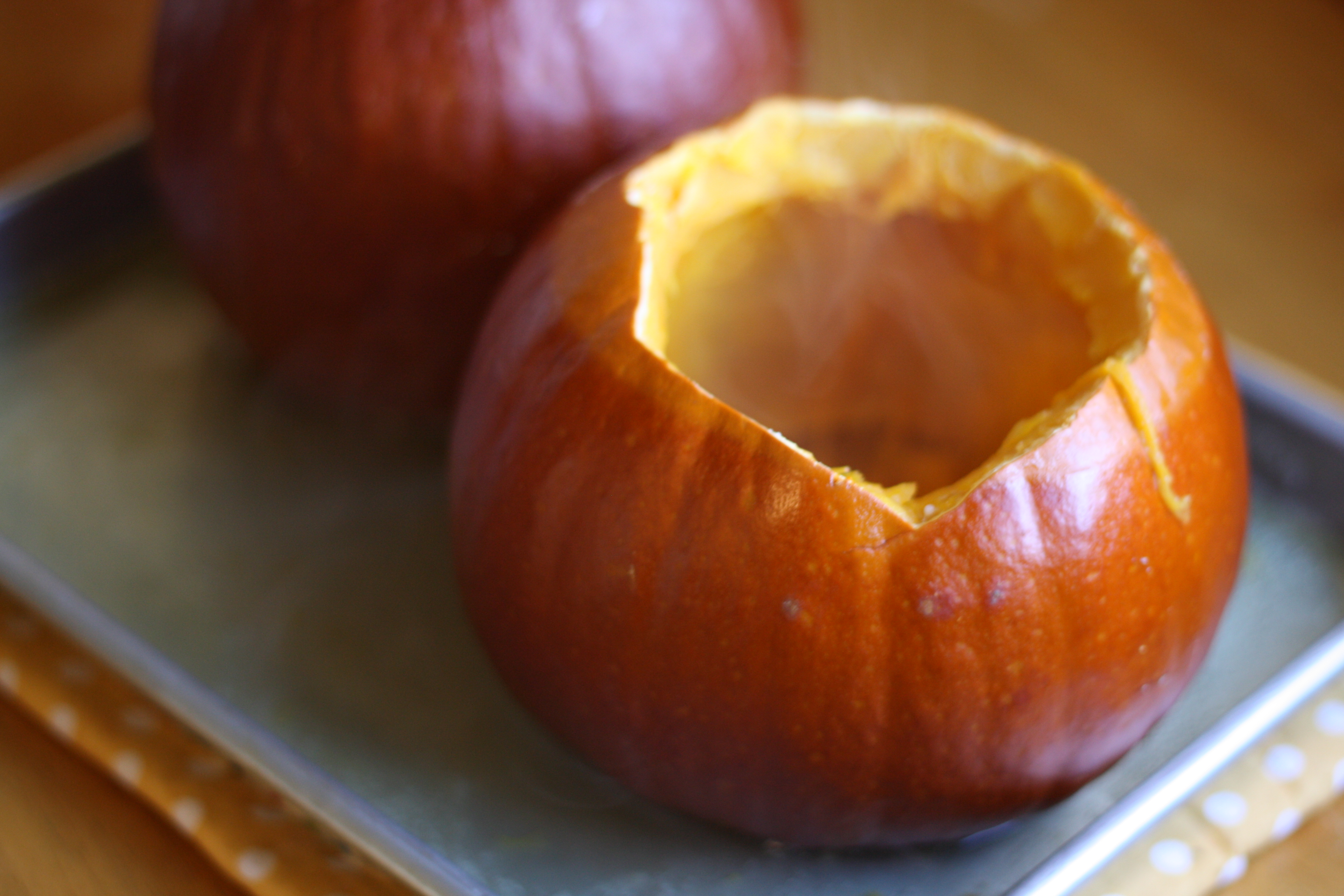
2. Ideally, cut the pumpkins in half, from the stem to the base. However, if you happened to purchase the world’s hardest pumpkins or perhaps left your pumpkins in the freezing car overnight, you may have to settle for simply sawing and prying off the top. After trying every one of my very sharp knives on my stubborn pumpkins, I considered inviting Squirrely inside to help. (He clearly knows how to get inside a pumpkin.) Seriously, a hacksaw wouldn’t have cut through my pumpkins. But, eventually I managed to wrestle the tops off. Don’t worry, if you can not manage to cut your pumpkins in half, rest assured that the  pumpkins will roast just as well with only the tops removed.

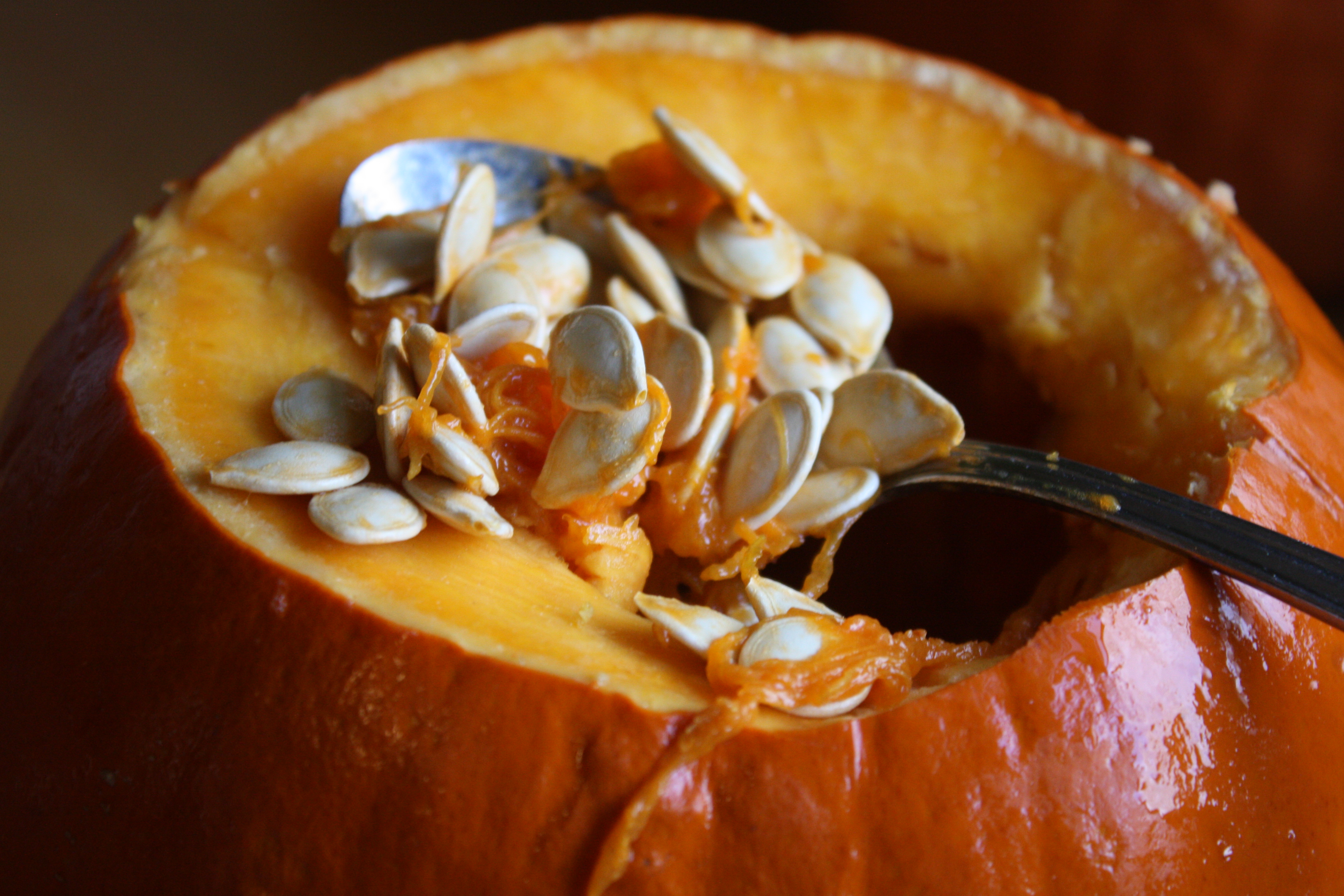
3. Use a spoon or ice cream scoop to remove all of the seeds and stringy parts from the pumpkin. Save the seeds for roasting.

4. Place the pumpkin upside down on a baking sheet (cut sides down, if you were able to cut your pumpkin in half). Fill the bottom of the baking sheet with a thin (1/4 inch) layer of water.

5. Roast at 375 degrees for about 90 minutes. Test by inserting a fork into the inside of the pumpkin. It should be quite tender. Allow to cool.

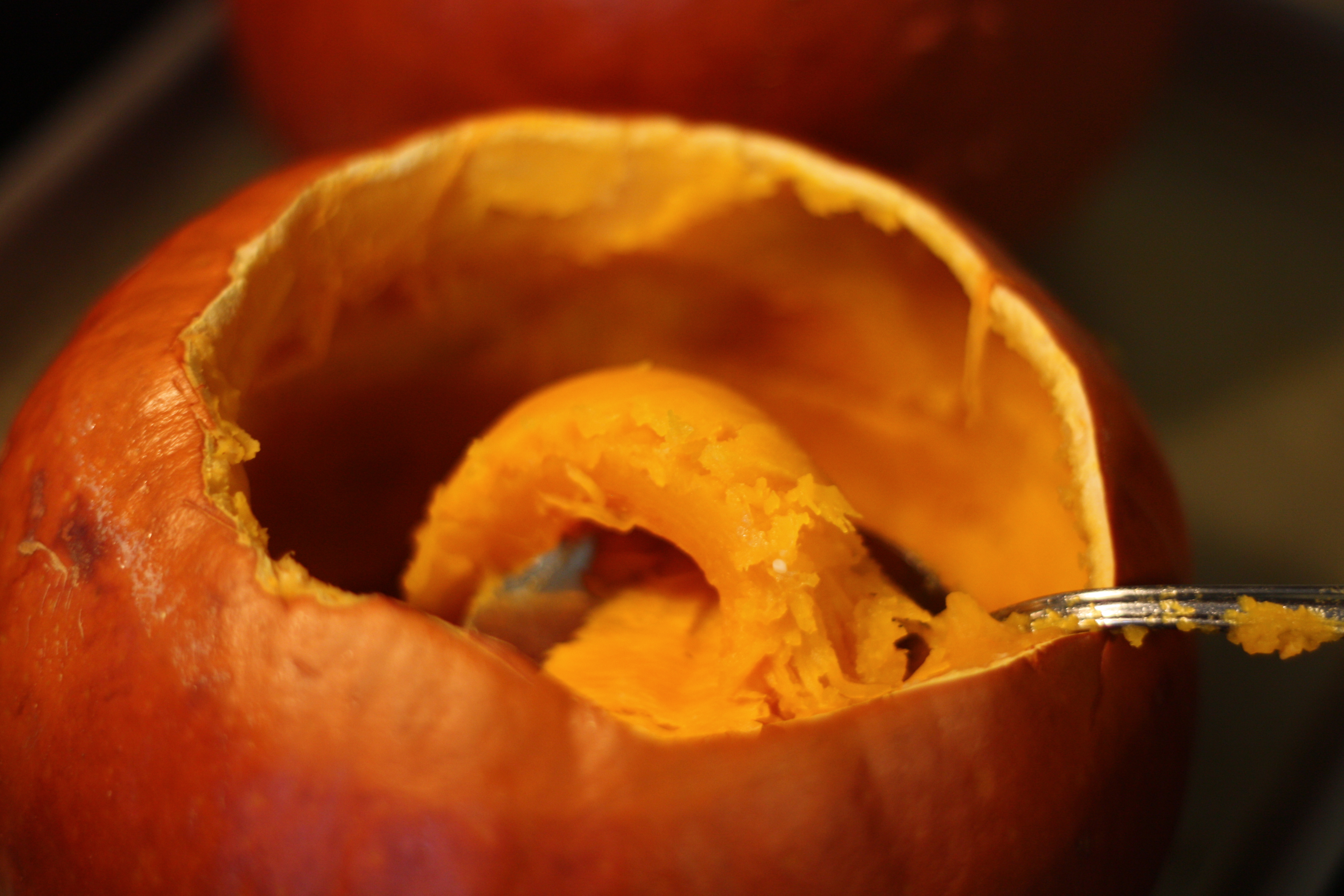
6. Scoop out the tender insides.

7. Use a blender, food processor, or immersion blender to puree until smooth. Refrigerate until ready to use.

** Two small Pie Pumpkins should produce about 3-4 cups pumpkin puree.

If you’re preparing fresh pumpkin puree, be sure to roast the seeds separately for a tasty snack. I seriously ate so many pumpkin seeds yesterday that I’m beginning to suspect I may be sprouting a pumpkin in my belly. They are a delicious and highly nutritious snack.

To roast the pumpkin seeds: Rinse the seeds and separate from the stringy pumpkin pieces. Discard the stringy pieces. Lay the pumpkin seeds in a single layer on a paper towel to dry. Spread the seeds onto a baking sheet. Toss with a bit of olive oil. Sprinkle with sea salt and pepper. Bake in a 375 degrees oven for about 20 minutes. Enjoy!

Stay tuned for the recipe for Fresh Pumpkin Coconut Pie, coming up next!

How to Roast Peppers

Roasted peppers are a sweet and delicious addition to many meals. My favorite thing is to build a little sandwich of roasted red peppers, fresh mozzarella, and a drizzle of balsamic reduction on ciabatta. Then, I wrap it up in foil and pop it in the oven until the cheese gets a bit warm and melty. Mmmmm! I’m drooling just thinking about it.

Roasted peppers are a cinch to make at home, so save yourself the money and make your own, rather than buying those jarred peppers. Here’s a little photo guide on how to easily roast your own peppers. Then, check out my Italian Mac and Cheese recipe (coming up later!) for a tasty way to put them to use!

Start with firm, fresh peppers. You can use any kind of pepper. My favorite variety for roasting are Red Bell Peppers.

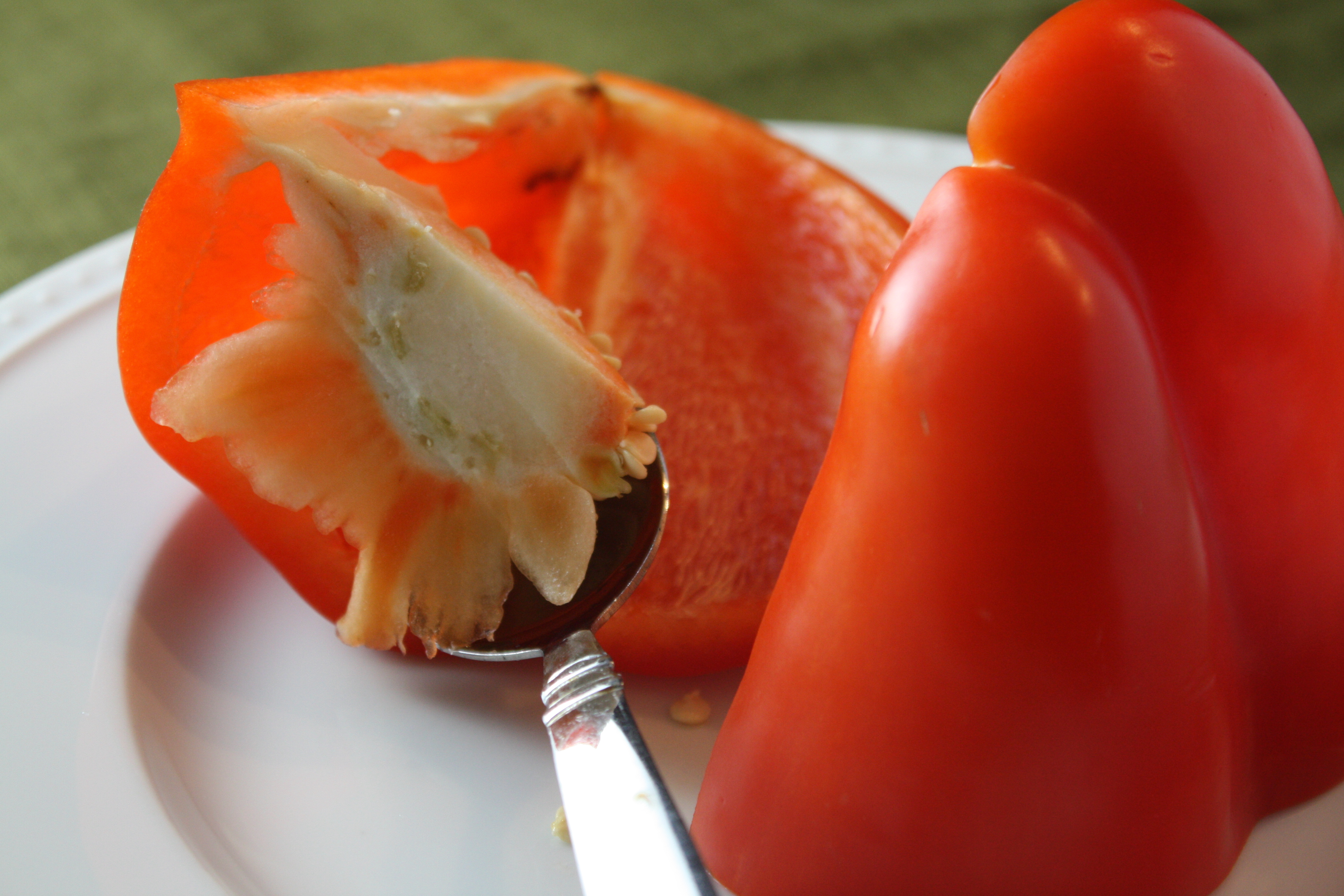
Cut the pepper in half. Use the edge of a spoon to remove the seeds and ribs.

Pour a drizzle of oil over the pepper halves and rub to evenly coat the skin side. Place the peppers, cut side down, on a baking sheet.

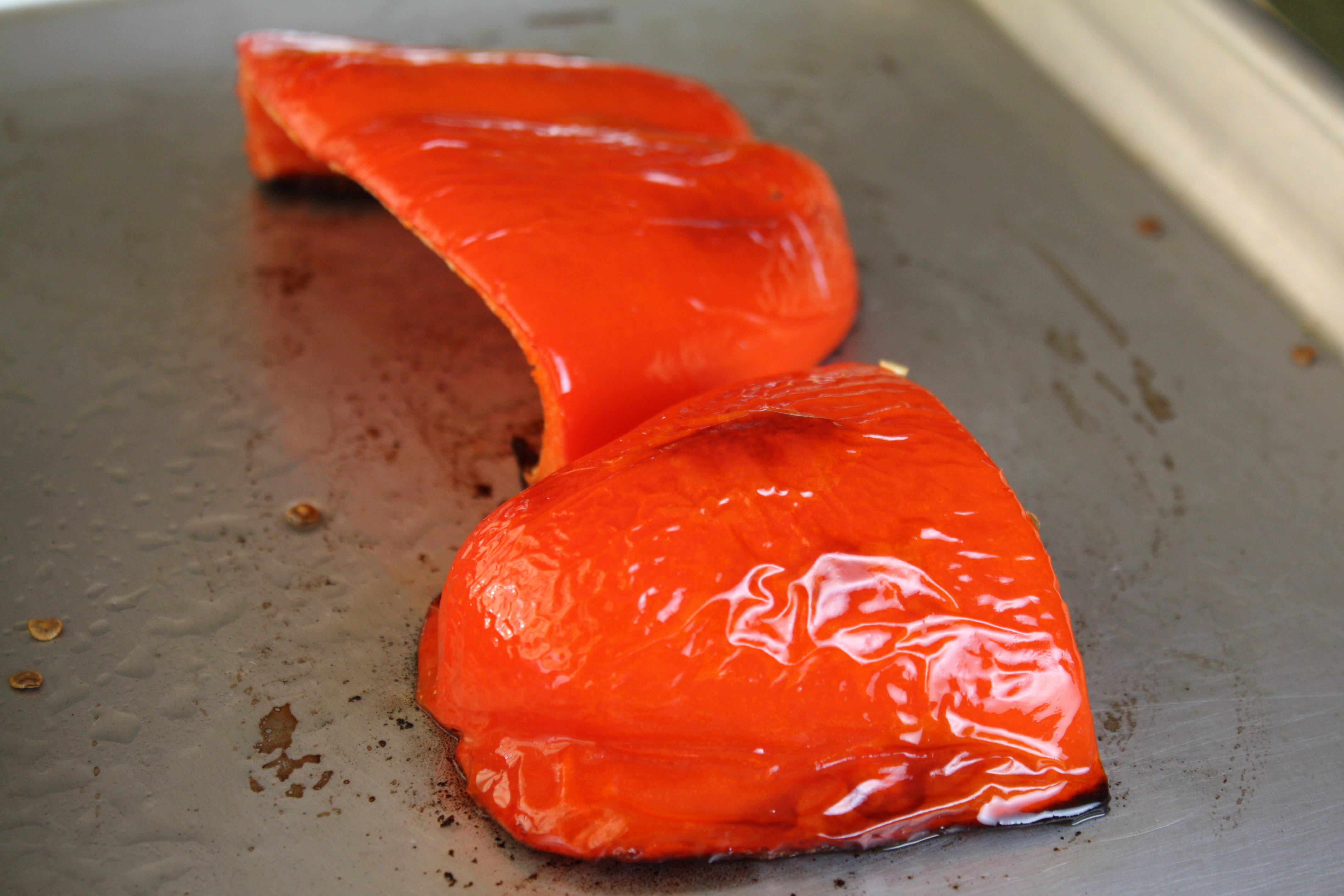
Cook in a 425 degrees oven for 15-20 minutes, until the top appears lightly browned and the skin begins to pucker.

Remove from the oven and place the hot peppers in a sealed ziploc bag. Allow to cool for 15-20 minutes. This step will help the skins to release from the peppers.

Peel the skin away from the peppers. If necessary, use the tip of a paring knife to release an edge, then simply peel the skin away.

Enjoy your homemade roasted peppers!

How to Make a Basic Chicken Soup

So, you’ve roasted a chicken for dinner. You’ve carved the breasts and removed the drumsticks and now you’re left with a mound of bones, skin, and some other inedible remnants. But there’s also a lot of good, tasty chicken hanging around too. Well, I’m almost positive that best part of cooking a roasted chicken, is using the leftovers for chicken soup! Doesn’t a big, hot bowl of fresh chicken soup sound great right about now??

Here’s a little guide on how to turn that leftover roasted chicken carcass into a pot of flavorful chicken soup. It’s not a specified recipe, but rather a basic process, which you can customize to your tastes. By the way, you can use this same process with your turkey carcass after Thanksgiving!

Here’s what you do:

Step 1: Take the whole carcass mess, throw it in a big pot, and fill the pot with enough water to cover the chicken. Bring the water to a gentle boil. Cover and let it simmer for a few hours. You can get it started right after you carve the pieces you’ll be serving for dinner that night!

Step 2: Give the chicken about 3 hours to simmer. Then, set a colander over a large container. Pour the chicken and broth through the colander. Save everything. Allow the chicken parts and broth to cool. Then, cover the container of broth and refrigerate. Place the chicken parts in a ziploc bag and refrigerate to cool. *If you haven’t prepared to make the soup, you can complete this step right away, then refrigerate overnight and pick up the remaining ingredients the next day!

Step 3: When the soup has thoroughly cooled (the next day), use a spoon to remove the excess fat, which will have risen to the top. Reheat the remaining broth, which will probably have thickened into a gelatin-like consistency.

Step 4: Add a bunch of rough chopped vegetables to the broth; celery, carrots, and onions. Don’t worry about cutting them nicely. They will be discarded after we’ve used them to add another delicious layer of flavor to the broth. These are your aromatics or mirepoix (pronounced meera-pwa). Simmer the broth with the vegetables for about an hour in a covered saucepan.

Step 5: While the broth is simmering with the vegetables, pick through that mess of chicken, which you strained the night before. Find and save any good bits of chicken. Discard the remaining bones, skin, and inedible parts. Also, cut up any leftover chicken breast or drumstick meat.

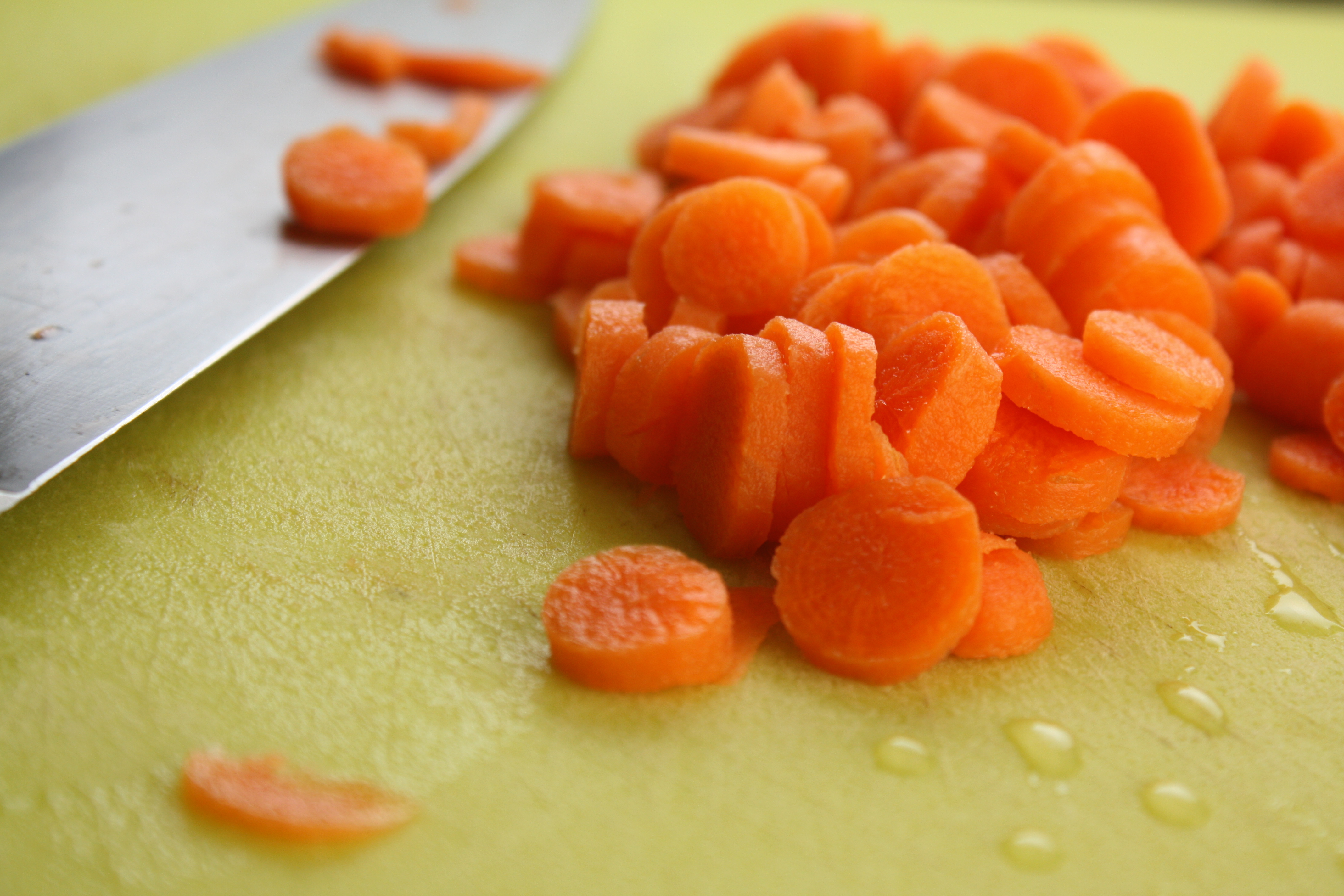
Step 6: Nicely chop the vegetables you’d like in your soup. I’m not a big fan of tons of mushy veggies in my soup, so I only added a handful of sliced carrots. But, celery, leeks, onions, or tomatoes would all be good additions. Cut these veggies small and even, since they will be remaining in your soup.

Step 7: After the rough-chopped veggies have simmered for about an hour, strain and discard the vegetables. Return the hot broth to the saucepan. If too much water has reduced during the simmering, add a little more. Taste your broth. It should have a rich, delicious flavor, but will be in need of salt and pepper. So, season with salt and pepper, as desired. I also like to add a dash or two of hot sauce. *If your soup tastes too watery, try simmering it without a lid for a little while to reduce the liquid and concentrate the flavors.

Step 8: Add the chopped chicken and your nicely chopped veggies. Bring to a simmer and cook for a few minutes, until your veggies are tender, but not mushy.

Step 9: Prepare some rice or pasta to serve with your soup. I prefer Orzo pasta.

Step 10: Serve a big ladle of hot, yummy soup over your rice, noodles, or pasta. Enjoy!

*Store the soup separately from the rice or pasta. If you mix them together, the rice or pasta will drink up the broth. Chicken soup freezes great!

**If you want to make chicken soup from an uncooked chicken, there’s no need to roast it first. Just remove the giblets, rinse the chicken, and throw it in a pot. Cover with water and bring to a gentle boil. Simmer for a three to four hours in a covered saucepan. Then, proceed from Step 3.

How to Supreme an Orange

Posted on

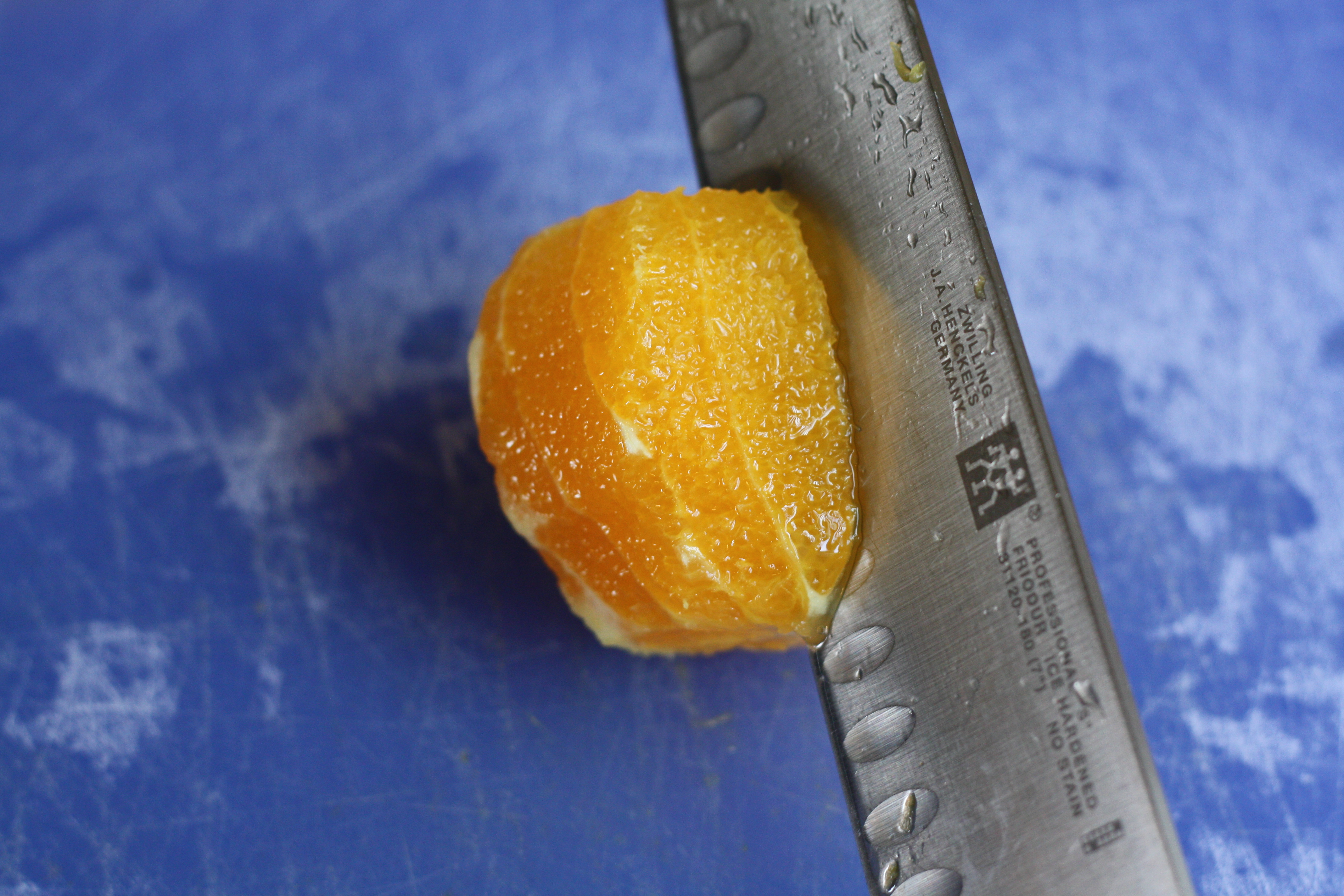
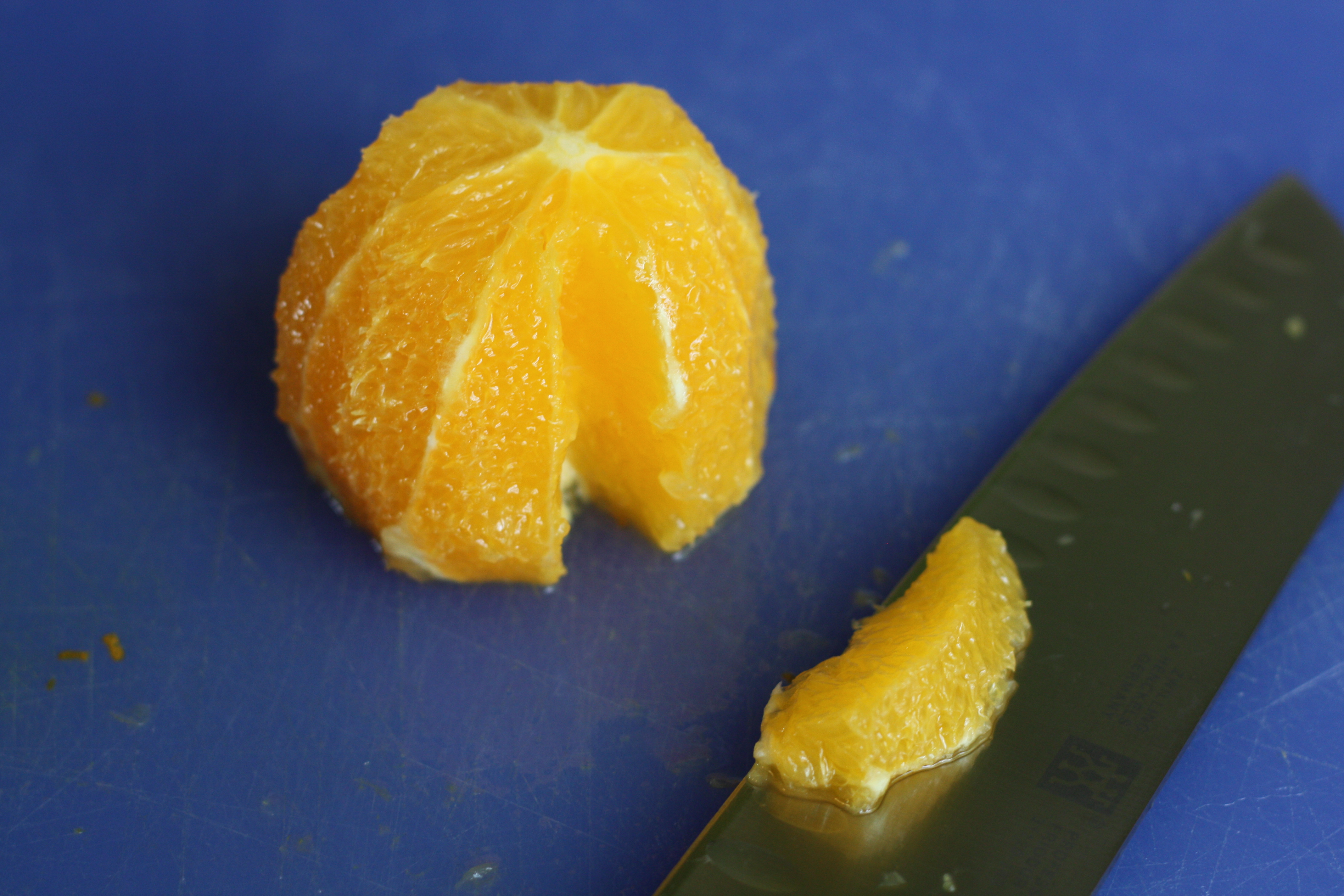
To surpreme an orange is simply the process of  removing the peel, pith, seeds, and membranes, which leaves you with clean, sweet orange segments. You may remember that I used orange supremes in the Piña Colada Salsa recipe and we’ll be using them tonight in duck a l’orange. Orange supremes are also delicious in salads. This same process can be used for lemons, limes, or other citrus fruits.

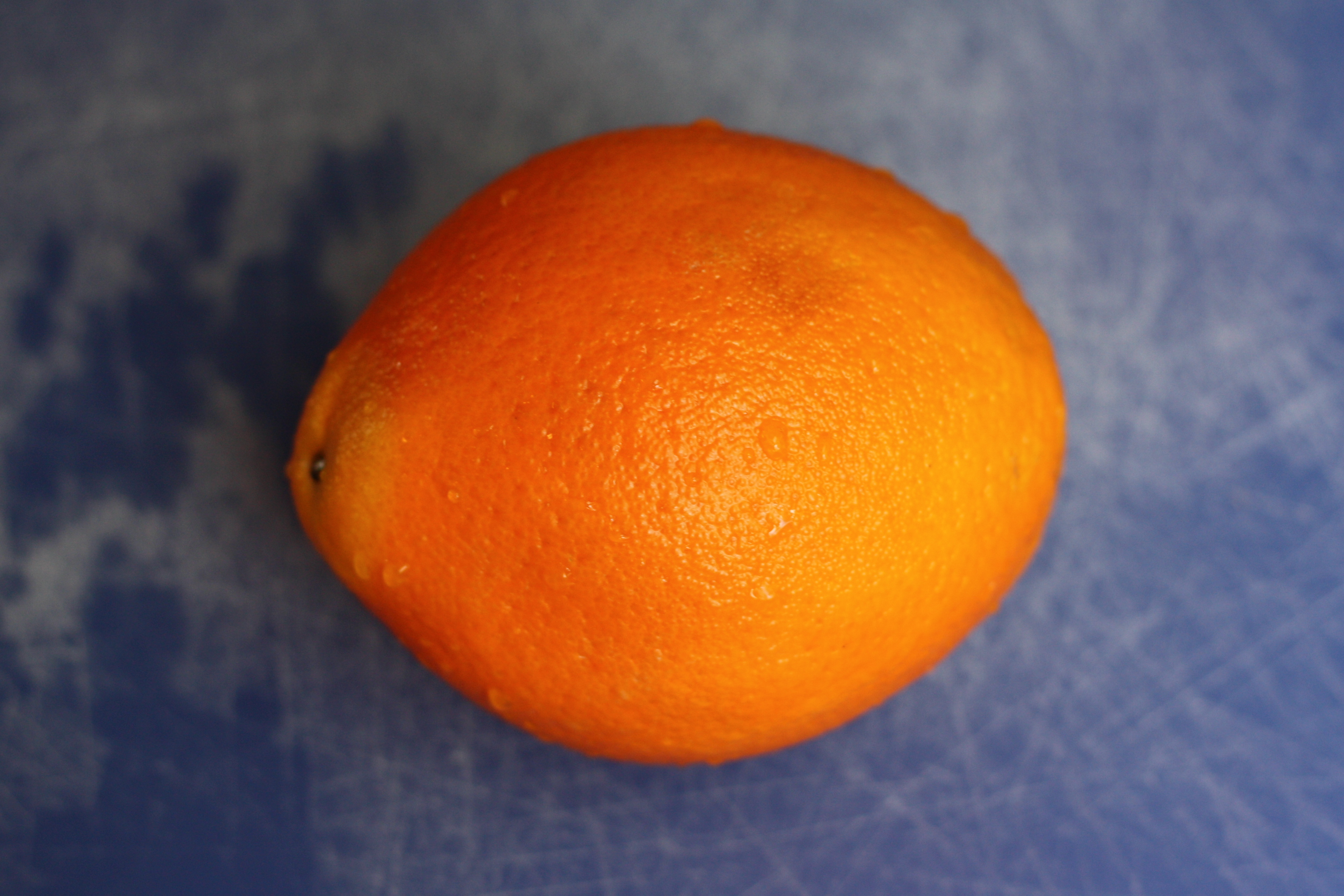
Start with an orange.

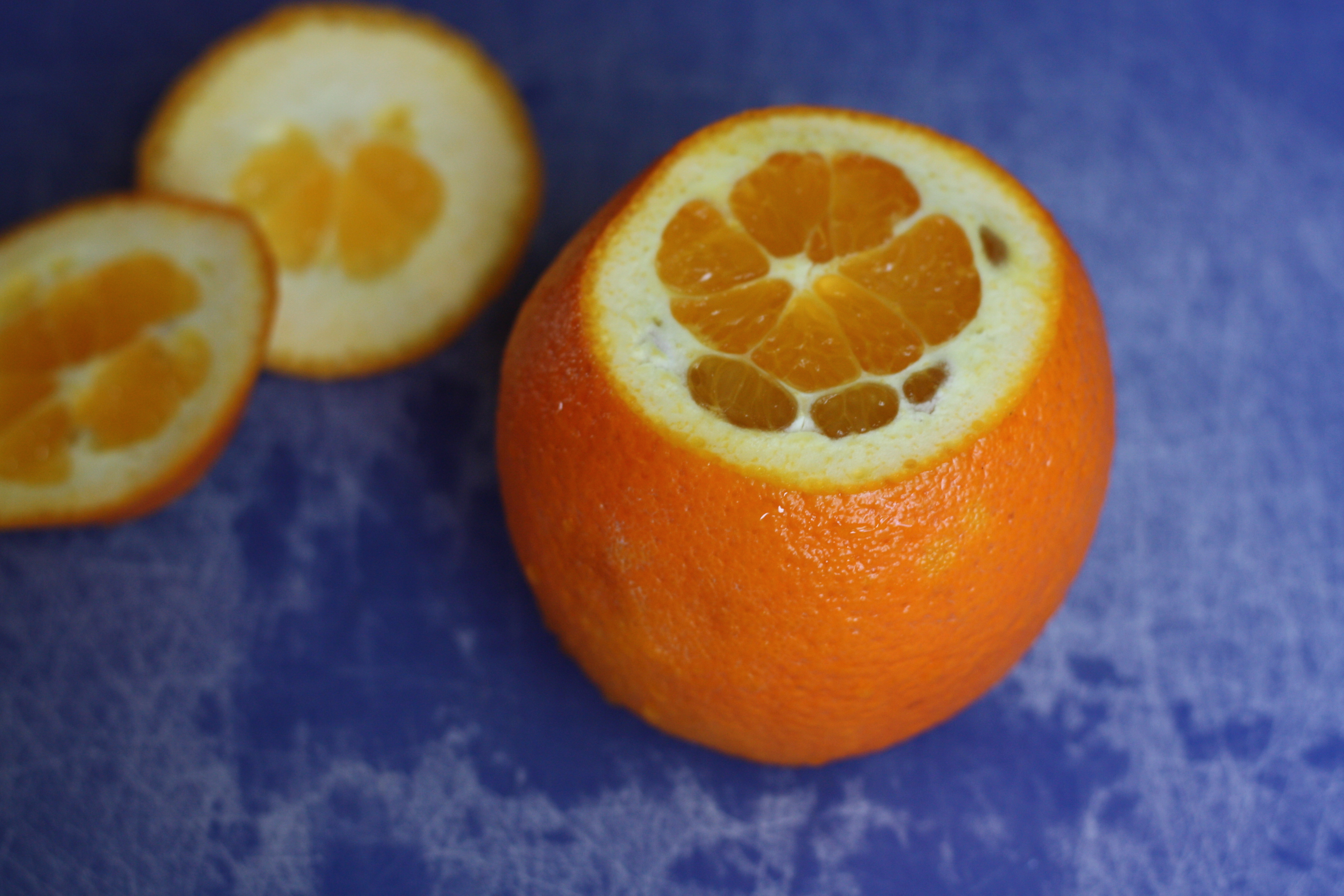
Cut off the top and bottom of the orange.

Use a knife to cut off the peel and any white pith.

You should be able to clearly see the membranes between the segments.

Carefully cut the segments from between the membranes.

Repeat the process until all orange segments are removed.

These are a Few of My Favorite Things

Posted on

Raindrops on roses and whiskers on kittens

Bright copper kettles and stuff in my kitchen

Shiny steel All-Clad pans, sharp Wusthof knives

These are the things which make cooking so nice.

When I’m chopping…

And sauteeing…

And I’m browning meat,

I simply make use of my favorite things…

And then we sit down to eat!

I have been collecting kitchen gear for as long as I can remember. I’d already begun a decent collection before I left for college. For years afterward, my birthday wishlist involved pots and pans. I got a knife one year for Mother’s Day. I asked Santa for a stainless steel colander. My collection has been built slowly over time. I’ve spent months collecting gift certificates at holidays and saving up for a prized item. I love diamonds and pearls as much as the next girl, but as far as shiny things go, I’d rather have a good knife or a pan. There are always more items on my wishlist, but at this point, I’ve got a pretty functional cooking collection. I love it all, but there are certainly some items which get more regular use; the items I couldn’t cook without. If you’re looking to build your cooking equipment collection, perhaps you’ll find some useful tips here.

These are a few of my favorite things…

Knives

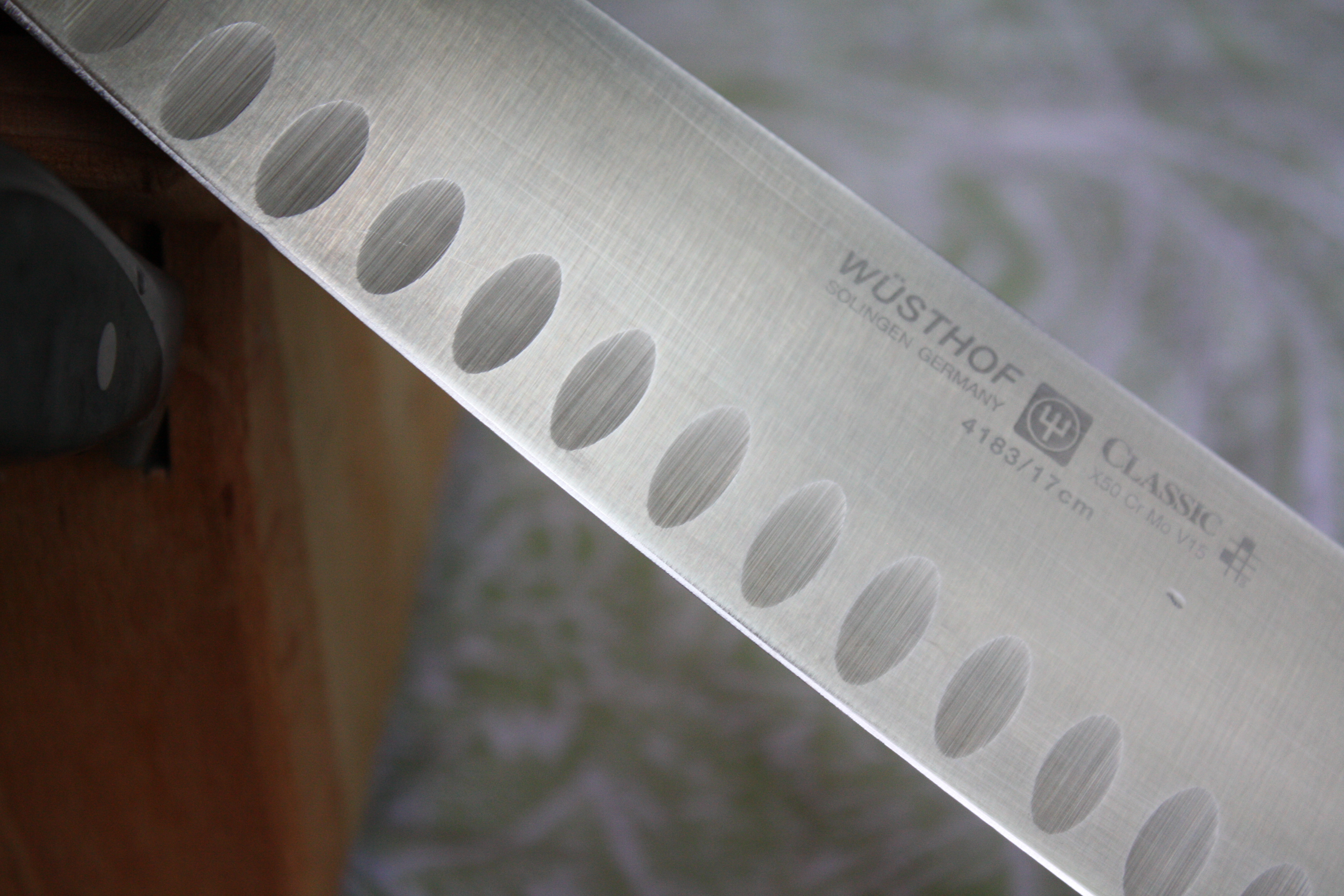
A couple good knives will change your culinary world. Sharp, high quality knives are safer to use than any dull knife. Most of my knives are Wusthof or Henkels, because I like the way they feel, but Shun and Global make excellent knives too. It’s a personal preference thing. You have to get your hands on the knives and see what feels good to you. Look for forged knives (not stamped) made of high-carbon stainless steel, with a full tang (that piece of metal that runs from the blade all the way through the handle. I like a knife with a good amount of heft. Of all the knives in my knife block, my Santoku knives (Japanese chef’s knives) and my long, serrated bread knife get the most use. If I could only have two knives, those would definitely be my keepers.

Pots and Pans

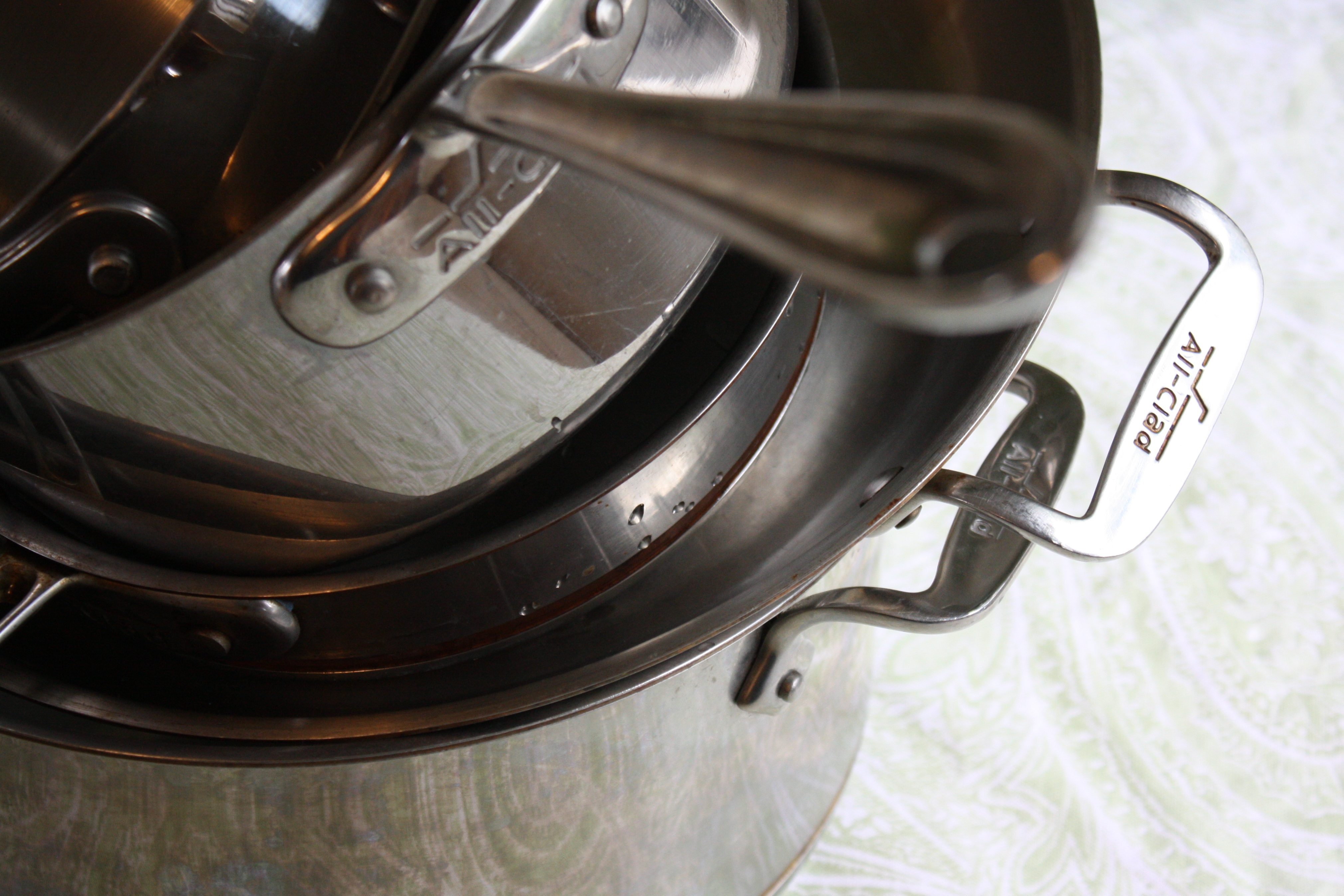
Oh, my darling pots and pans! Don’t ask me about my pots and pans, unless you have a lot of time on your hands. I could talk for hours about them. All-Clad should pay me for the time I’ve put into raving about their cookware. My pots and pans are the prized gems of my collection. I’m an All-Clad girl through and through; copper-core, given my druthers. I’d rather save my money for one good All-Clad pot than fill up my cupboard with a collection of something else. In my opinion, this cookware is as good as it gets. Truth be told, these pots and pans are not cheap. But, they will last you forever. You’ll pass these pots and pans onto your grandchildren. Seriously. Don’t worry about trying to buy a whole collection at once. You’re better off buying a pot or pan at a time based on your needs. Whatever you choose, look for cookware that’s sturdy with solid construction. Avoid pots and pans with a disk base, which will be more likely to warp if overheated. I’ve had that happen more than once in my pre-All-Clad days. I’d recommend that most of your pots and pans are a high quality stainless steel, which is most durable and won’t interact with foods. Look for cookware that is oven safe, since it’s a really convenient thing to be able to move a pan from stove top to the oven. I’m leery of non-stick surfaces due to health concerns, though I do keep at least one non-stick pan on hand for omelets. My favorite cookware, the All-Clad Copper-Core line, features a five layer construction with the durability of stainless steel on the interior and exterior sandwiching layers of highly conductive, even-heating aluminum and copper. It’s also handy to have a good cast-iron skillet, grill pan, and dutch oven on hand. Le Creuset makes excellent and beautiful enameled cast-iron cookware.

Instant-read Meat Thermometer

This is one of those items that I think belongs in every kitchen. I use mine almost every night. It takes the guesswork out of determining if your meat is cooked, helping to ensure that things are cooked safely, without overcooking. To use an instant-read meat thermometer, first remove the meat from the heat. If you’re measuring something large, like a roast, remove the pan from the oven. If you’re measuring something smaller, like a chicken breast, lift it slightly from the pan with a spatula or tongs, before inserting the thermometer. You want to be sure you’re measuring the temperature of the meat, not the heat in the pan, oven, or grill. Insert the thermometer into the center of the meat. Make sure that it doesn’t poke out the other side or make contact with the hot pan. Read the temperature, then remove the thermometer and continue cooking, if necessary.

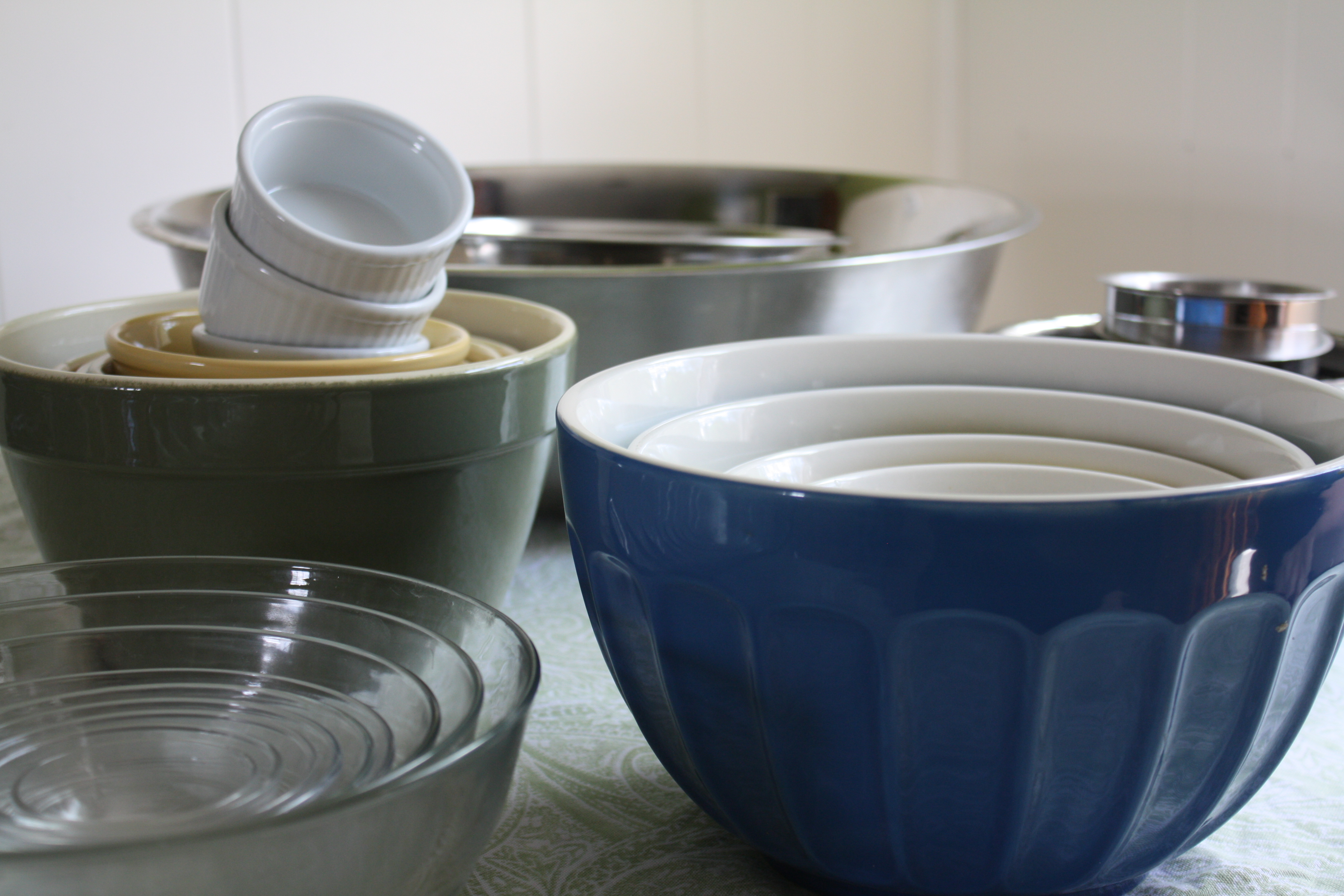
Assortment of Bowls

Sort of an obvious one, but I love my bowls! I’m partial to the bright ceramic ones, but the stainless steel bowls are definitely most versatile. I especially LOVE my huge stainless bowl, which is invaluable when I’m making big batches of salads for parties or mixing up cookie dough.

Colanders and Strainers

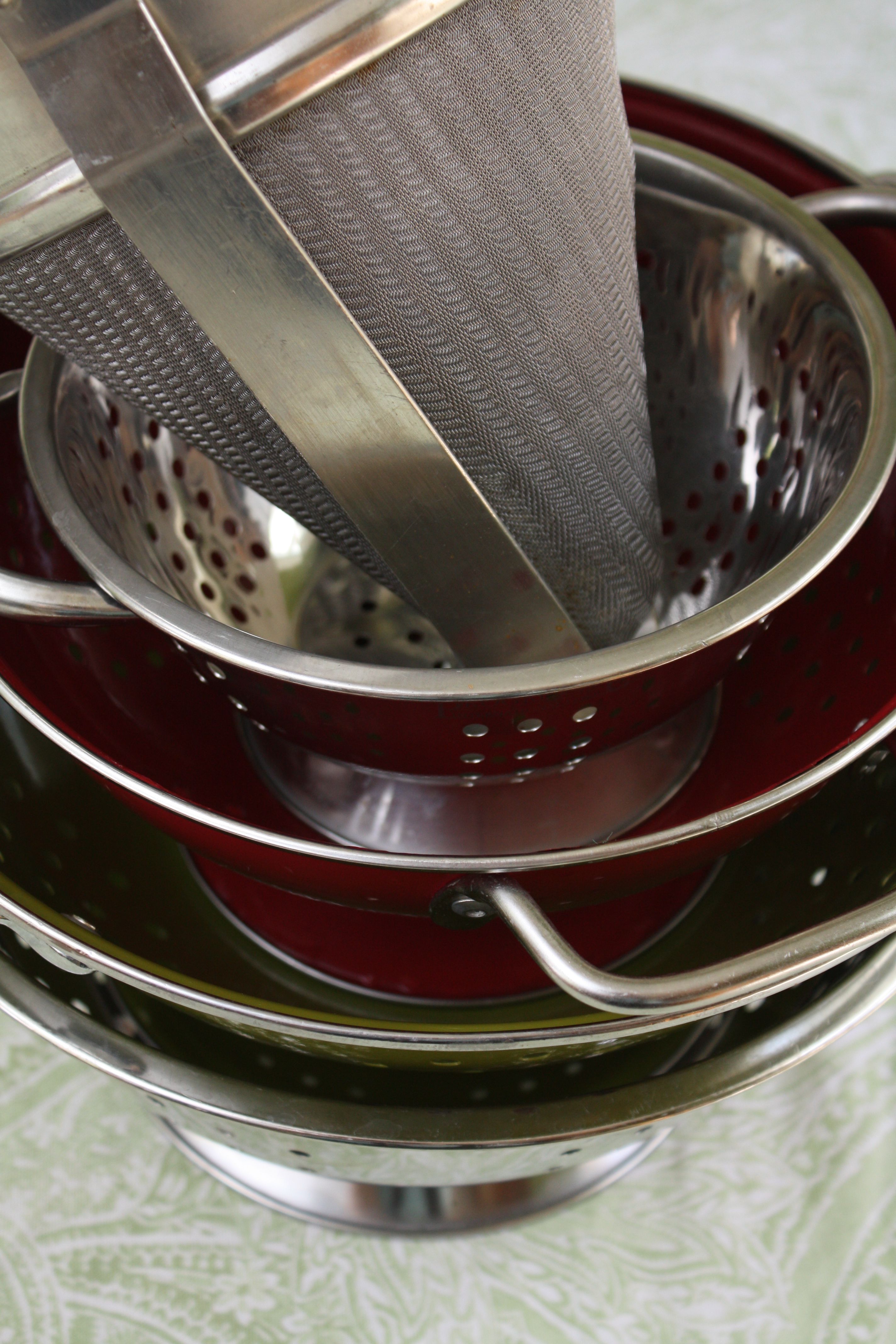
I love pretty enameled colanders, though admittedly the stainless steel ones are more durable. There’s really no reason for anyone to have as many colanders as I do, but I love them. The conical shaped strainer is called a chinois (pronounced shin-WAH). It’s a very fine mesh strainer, great for straining sauces or stocks.

Baking Sheets

Nothing too exciting about these. Just a couple of sturdy aluminum baking sheets, which get a tremendous amount of use.

Salt and Pepper

So, maybe salt and pepper doesn’t seem to go along with the other items on this list, but somehow they belong here. I keep my little canister of kosher salt sitting next to the stove. It gets used in almost every single thing I cook or bake. Salt is a flavor magnifier. A touch of salt can make a dramatic difference in the flavor of a dish; turning something bland into something spectacular. Don’t neglect your salt. Keep it handy and use it often.

Immersion Blender

I hardly use my small kitchen appliances; partly because they’re out of the way and I don’t have a more convenient place to store them and partly because I like be hands-on when I cook. I honestly love chopping, slicing, kneading and whisking until my arms are sore. I have just about every small kitchen appliance in the book; large and small food processors, hand-mixers, stand mixers, ice cream makers, coffee grinders, espresso machines, and blenders. But they are all lonely and neglected. Out of all of the small appliances I own, the one that gets the most use is my immersion blender. It’s a relatively inexpensive addition to any cooking collection. It doesn’t take up a lot of space and it’s easy to clean. I use mine for smoothies, blended soups, pureeing vegetables and fruits, making sauces, and lots of other things.

Good cookware doesn’t make the cook, but it sure helps!

I love talking about cooking equipment, so if you ever have a question, just ask!

How to Caramelize Onions

Posted on

Caramelized onions are onions which have been cooked slowly to develop and caramelize the onion’s sugars. They have a very sweet, mild onion flavor, which tastes delicious on burgers, tarts, sandwiches, pizzas, salads, and steak, amongst other things. They make the best base for French Onion Soup. Heck, I’d even put them on ice cream! You can caramelize any type of onion or even shallots. Here’s a step by step guide for making caramelized onions.

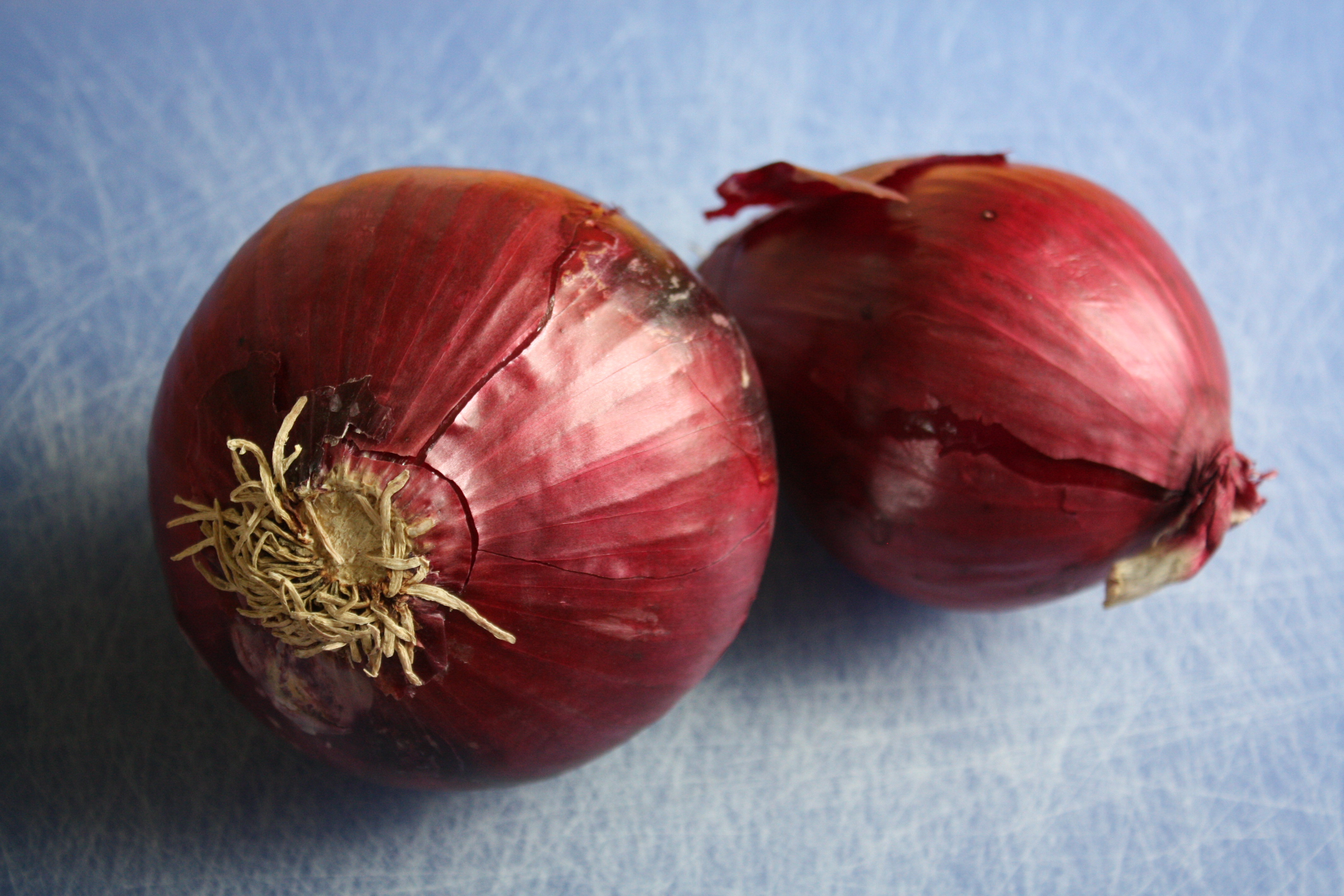
Start with a couple onions.

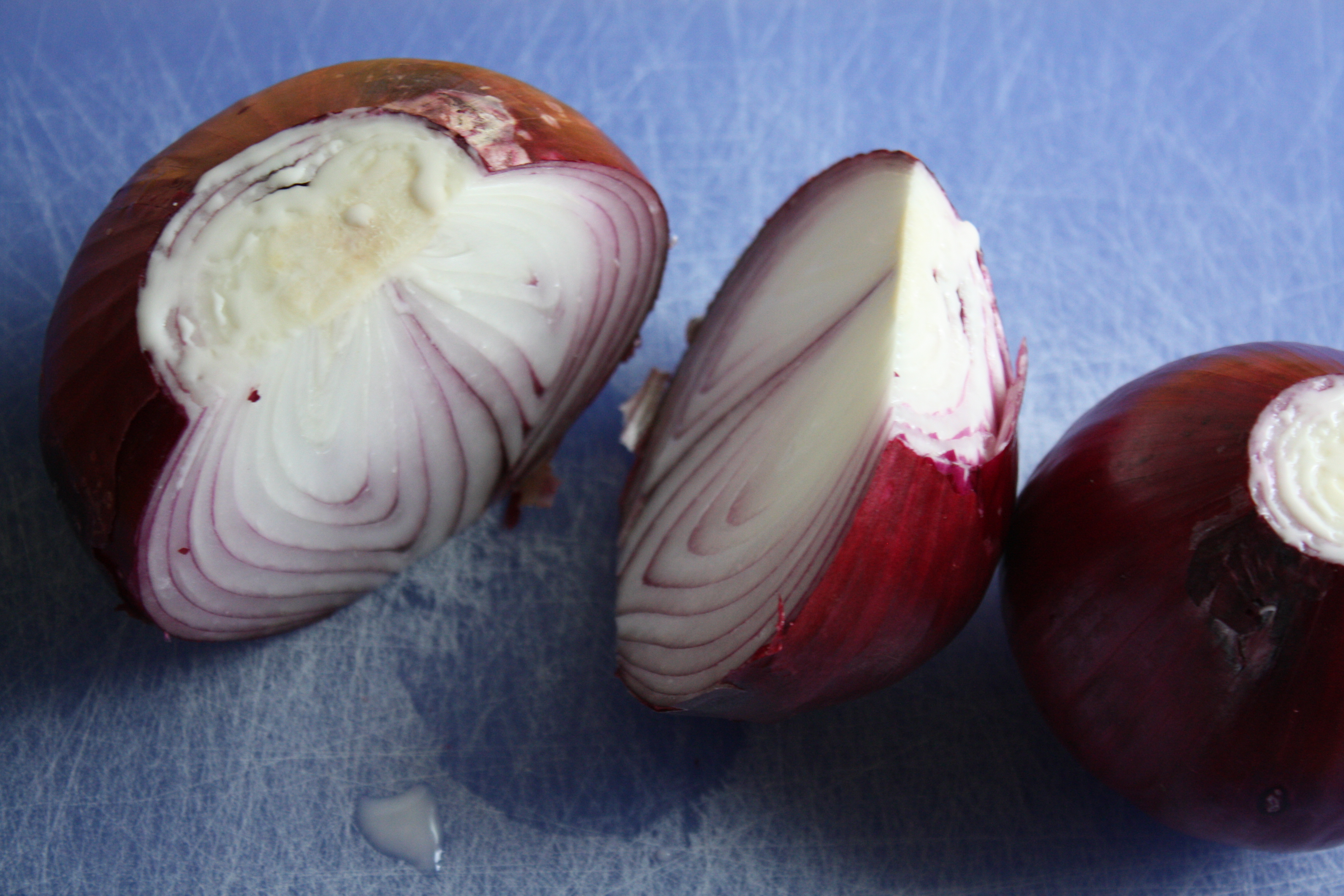
Cut off both ends of the onion.

Stand the onion on one of the cut sides and cut it in half.

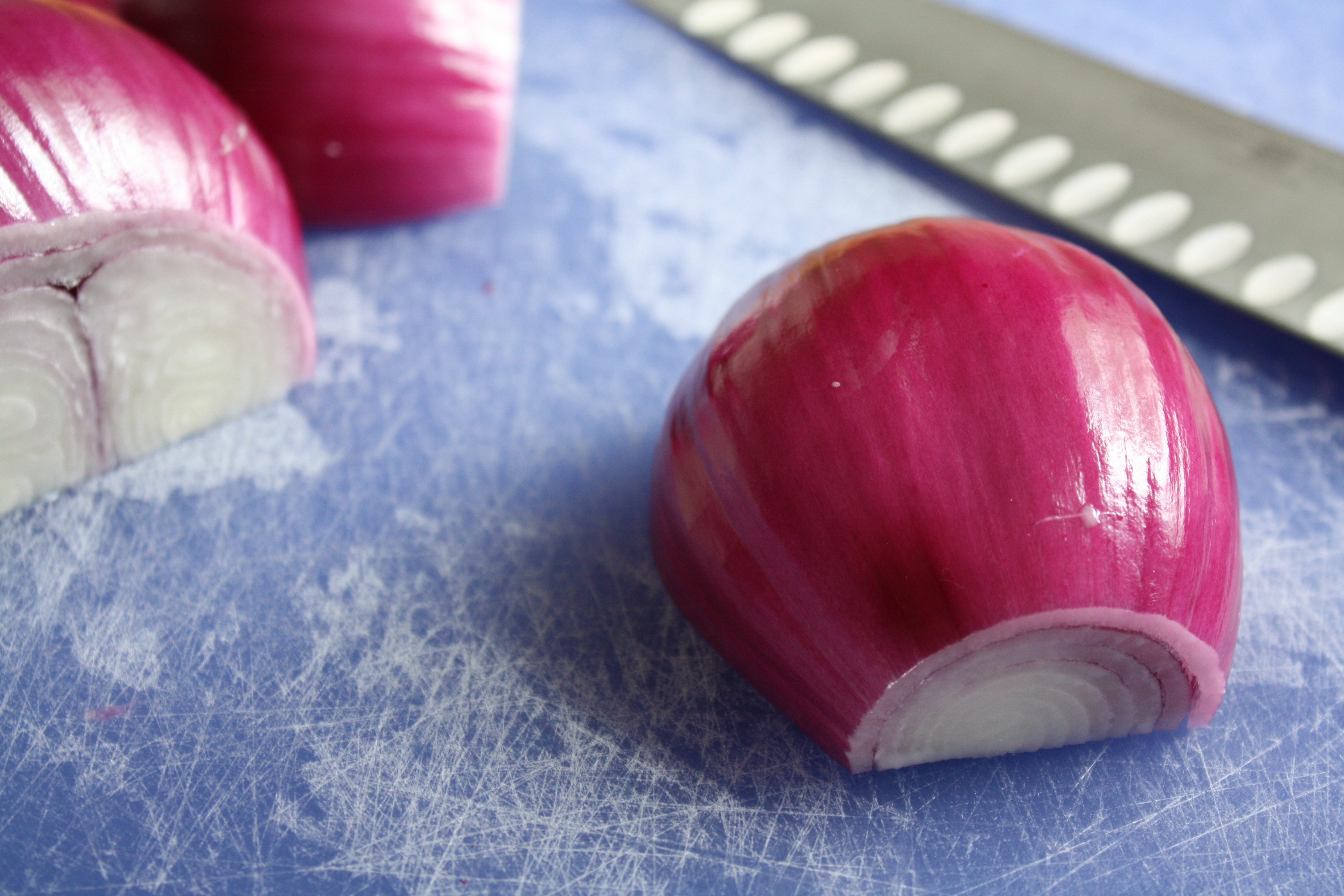
Lay the onion cut side down.

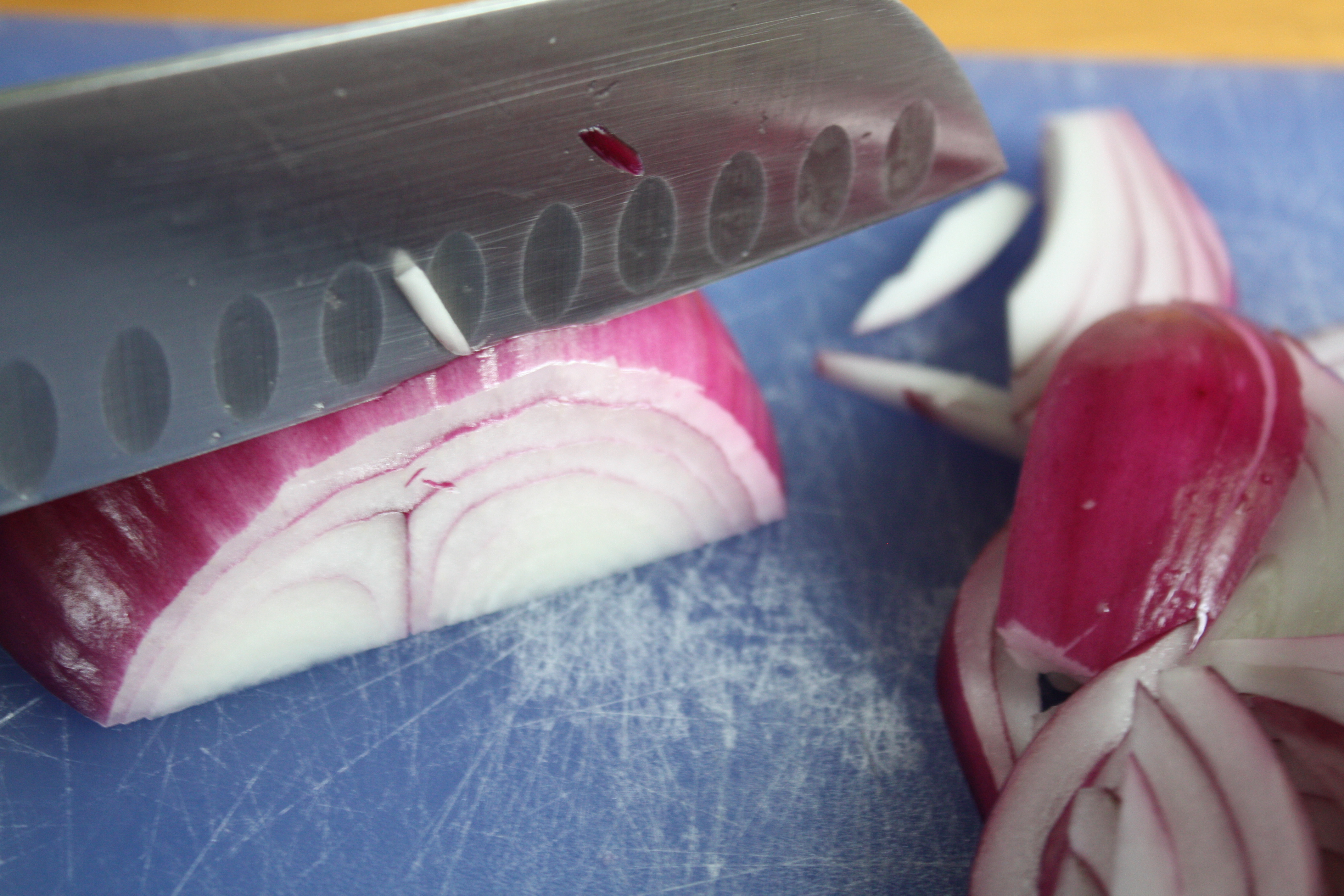
Cut the onion into slices from root to the opposite end.

Do NOT cut the onion into half-rings. Onion cut in this manner will fall apart during cooking.

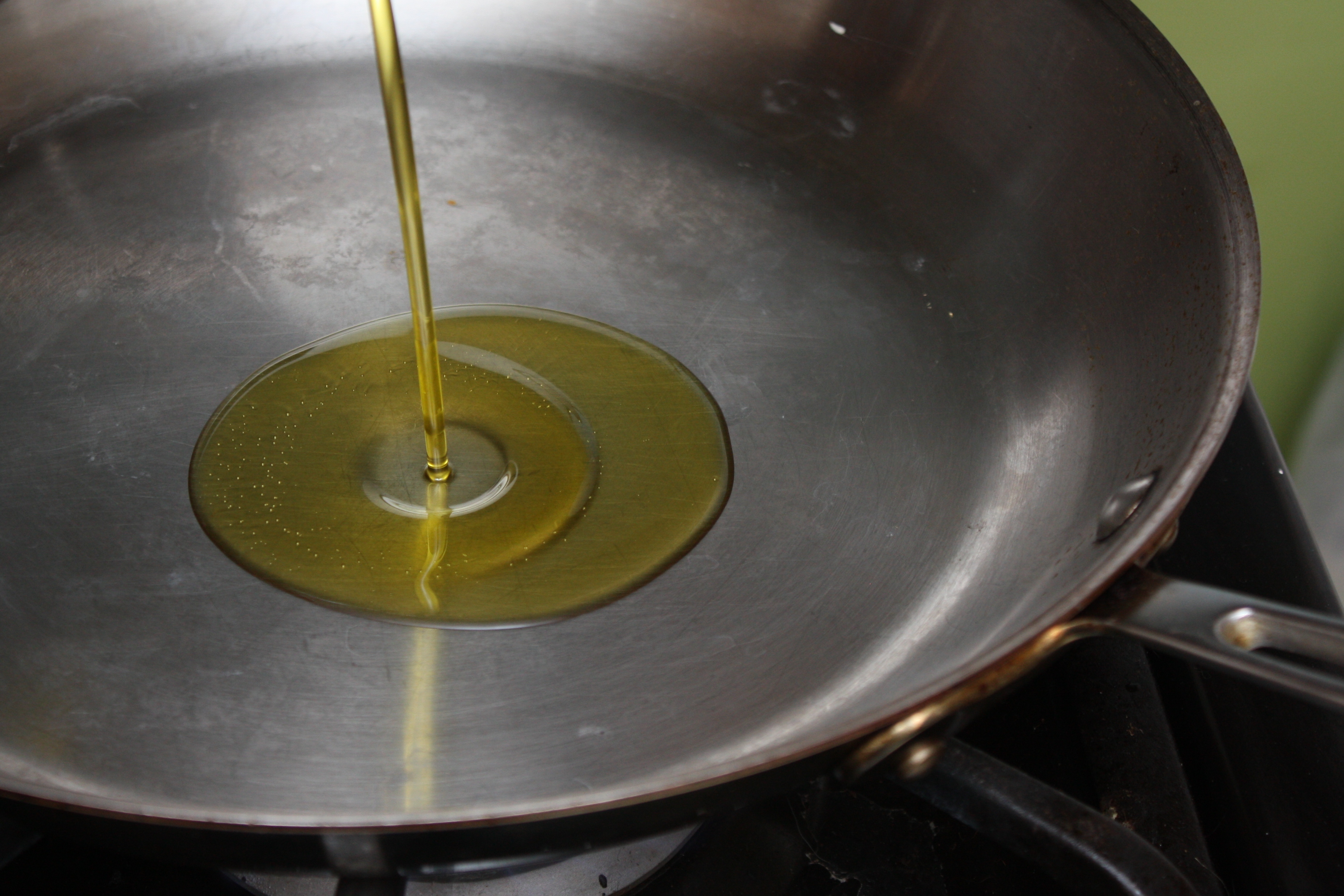
Put a couple tablespoons of oil or butter into a pan. Heat over medium heat.

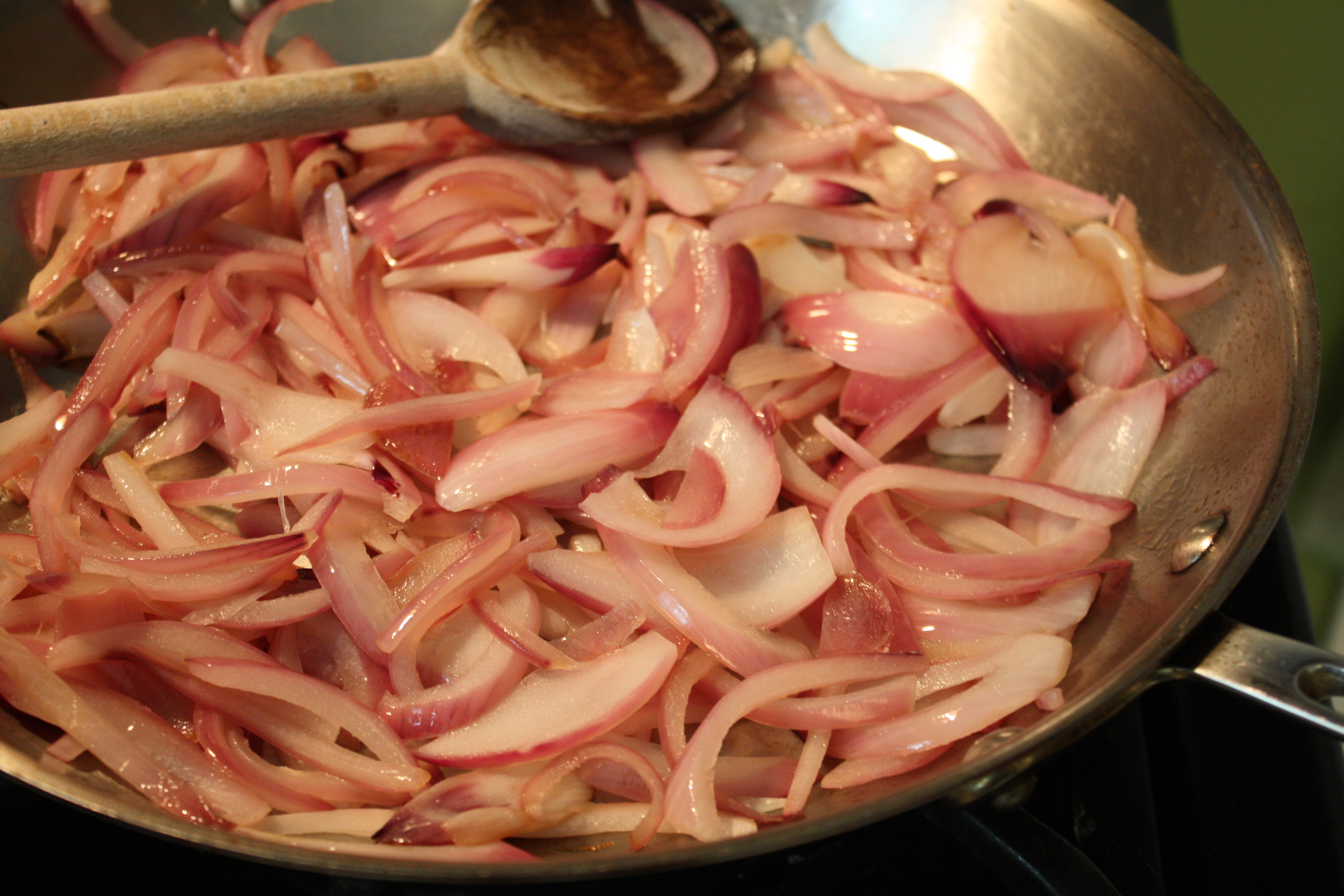
Add the onions to the pan.

Cook for a few minutes over medium heat, stirring frequently to prevent burning.

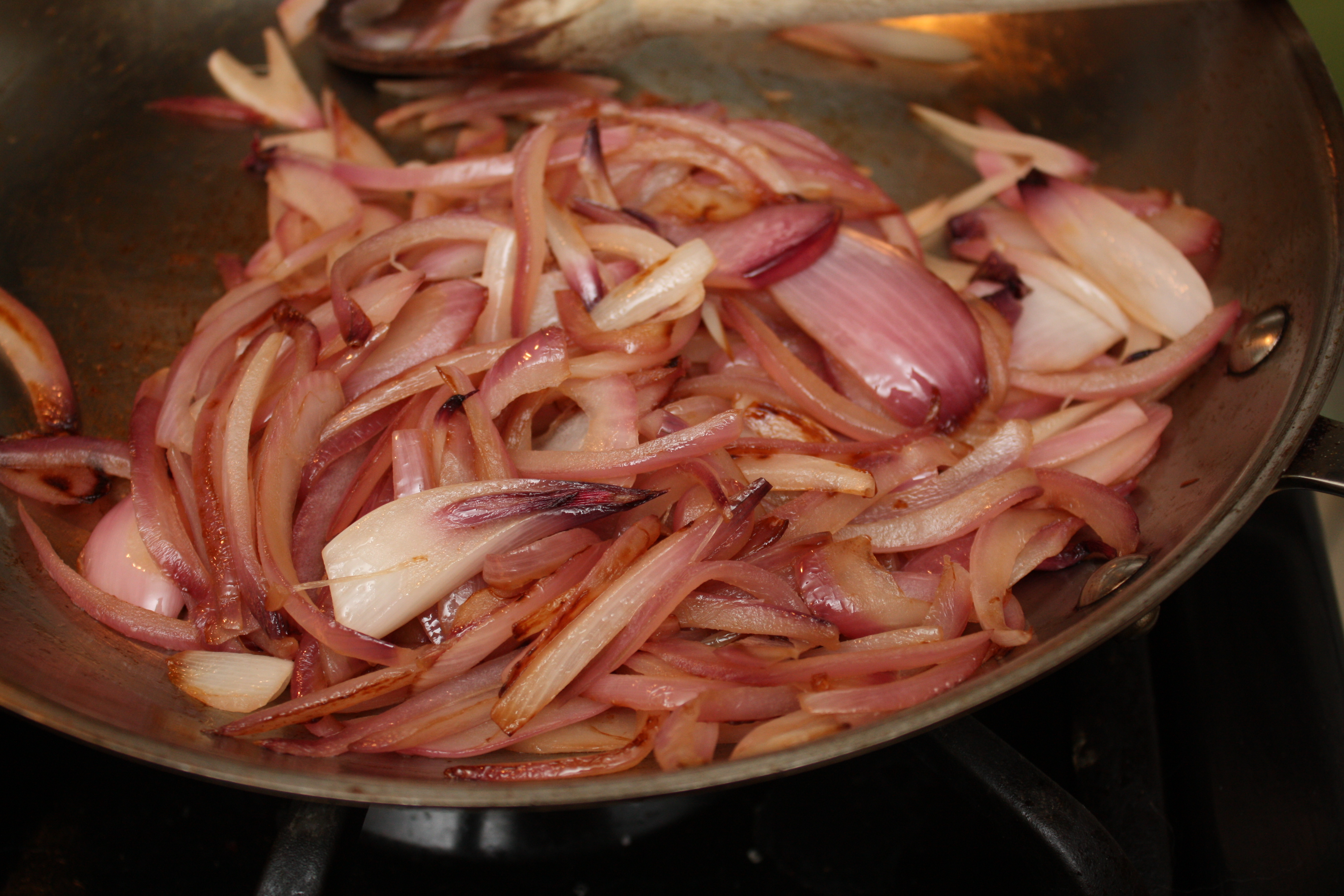
Turn the heat down to medium-low and continue cooking for another 15-20 minutes until the onions reduce in size and take on a caramel-brown color. Stir often and adjust the heat, as necessary, to prevent burning.

Enjoy your sweet, delicious caramelized onions!

How to Chop a Pineapple

Posted on

Sweet delicious pineapple makes a wonderful summer treat and great addition to salads, smoothies, and pork, chicken, and seafood dishes! Here’s a little guide for how to handle a ripe, fresh pineapple.

Start with one ripe, delicious pineapple.

Cut off the top of the pineapple.

Cut off the base of the pineapple.

Stand the pineapple on its sturdy base.

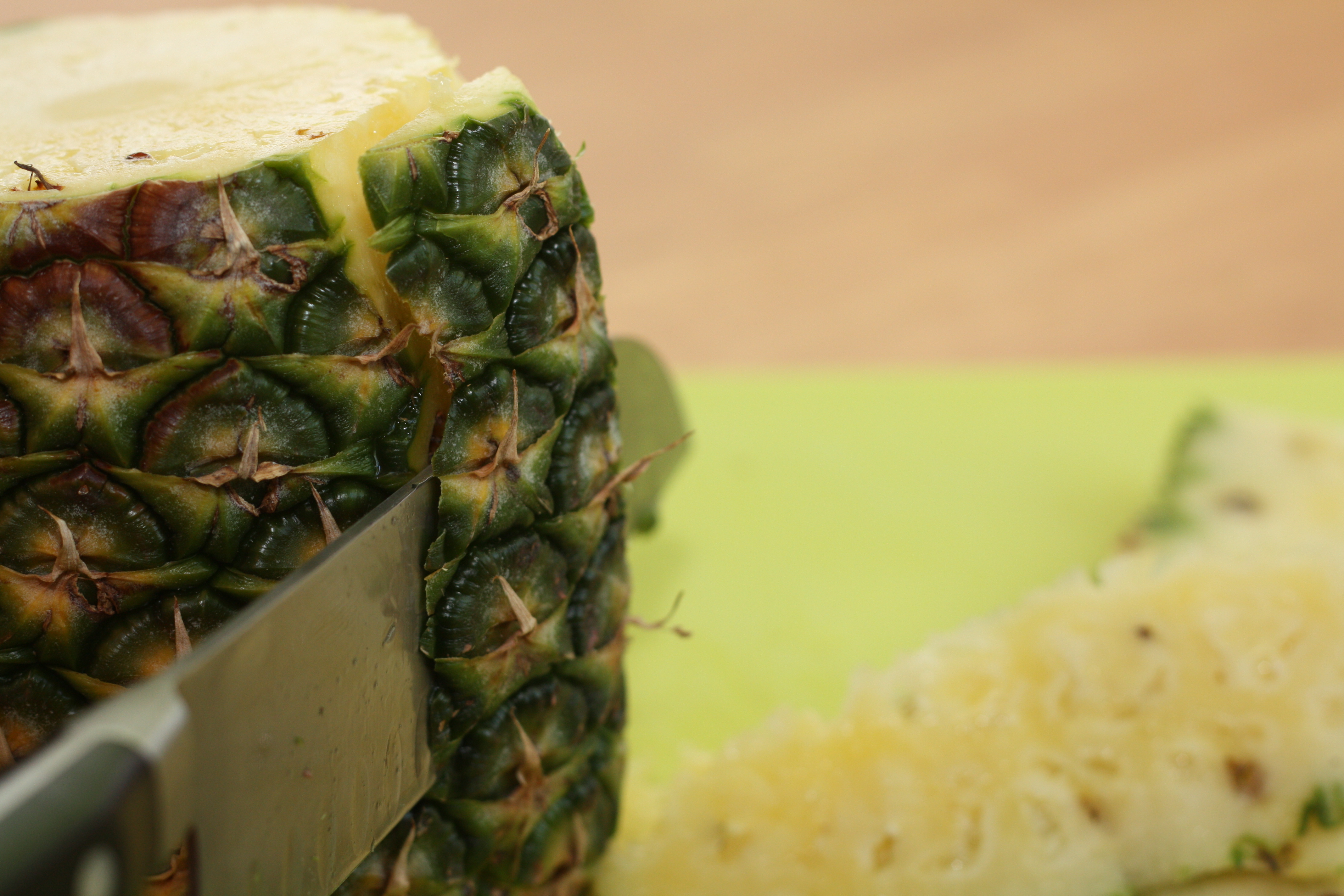
Carefully cut off the outer skin and eyes.

For rings, lay the pineapple on its side and slice.

Cut out the core.

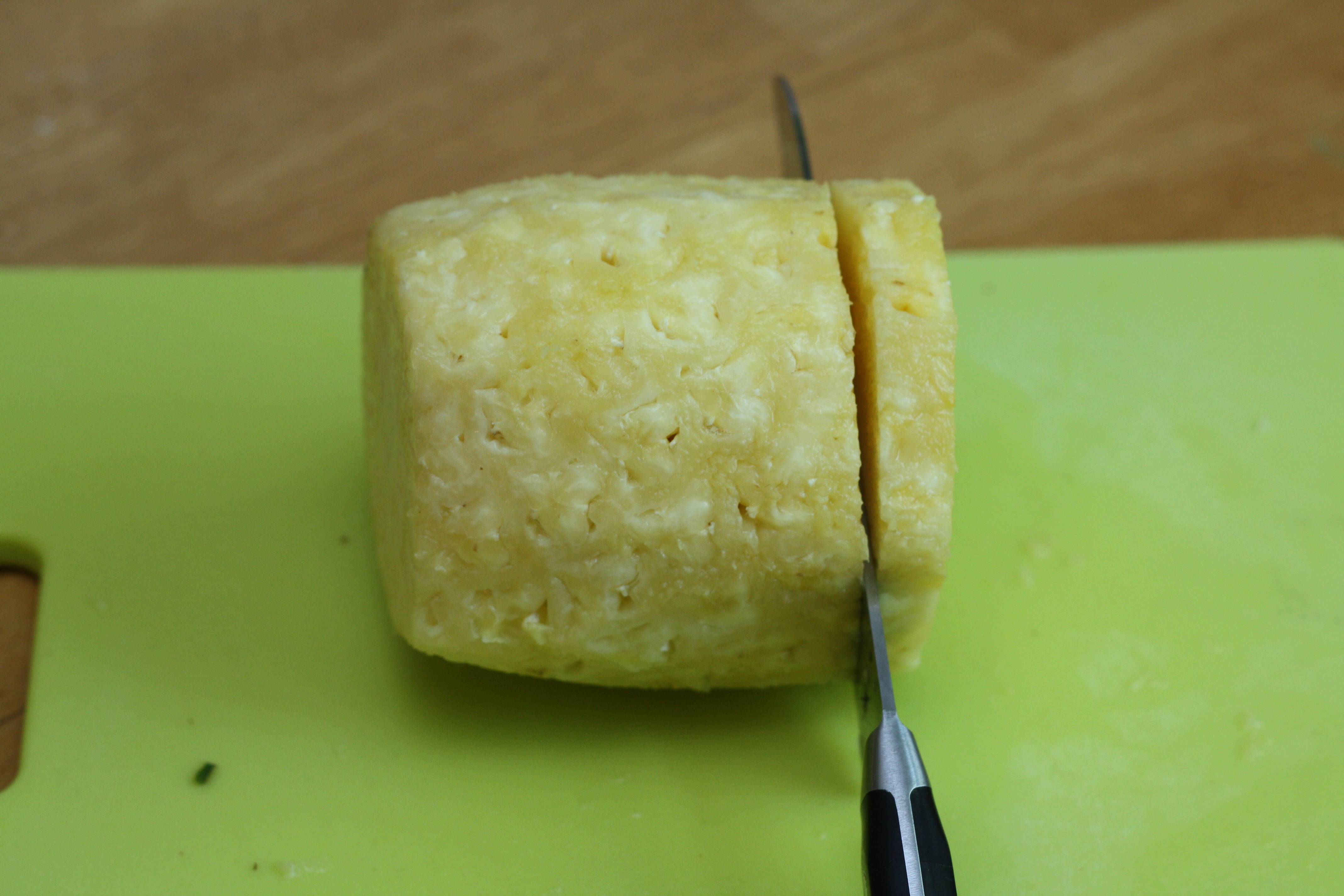
For chopped pineapple, stand it up on the flat base and cut into quarters.

Cut out the core. Then chop as desired.

How to Open a Coconut

Posted on

There are many different strategies for opening a coconut. Here’s a little guide to the approach I took.

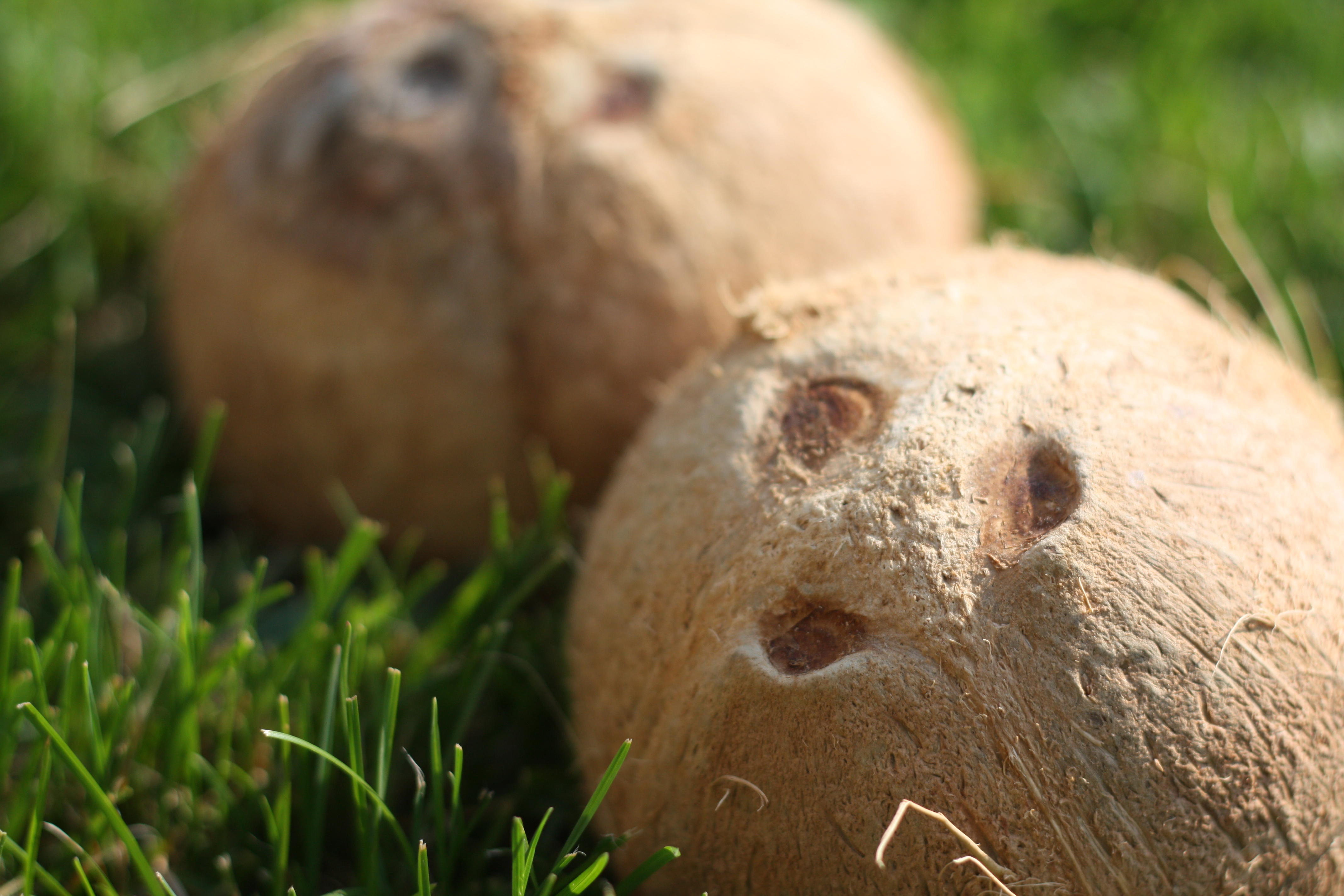
Start with a fresh coconut. You should be able hear the coconut liquid sloshing around inside when you shake it.

Use a sharp knife or nail to find the softest eye.

Puncture the eye with the knife or nail.

Allow the coconut liquid to drain into a glass or bowl. Drink the sweet liquid or refrigerate until use.

Whack the coconut with a mallet or hammer until it cracks. This little guy enjoyed giving the coconut a little whack, but grown-ups are better equipped to handle this step.

Alternately, place the coconut in a plastic bag and give it a firm slam onto concrete or another hard surface. This strategy was the easier of the two. Note the sunglasses, hooded sweater and lack of pants on my three year old. This is how he insists on dressing when the temperature is in the 90's. Kids!

To remove the coconut meat, insert a butter knife between the meat and the shell all the way around. Use the leverage from the butter knife to pop the meat out.

How to Make a Roux

Posted on

A roux, pronounced Roo, is a thickening agent made up of equal parts fat and flour. Any fat, such as oil, bacon grease, or shortening can be used, though whole butter or clarified butter are the most common. Roux is commonly used to thicken sauces, stews, soups, and gravies. A roux can be white, blond, or brown, depending on the length of time it is cooked. A darker roux has a stronger flavor, but has less thickening power. A white roux is the strongest thickener and a neutral flavor. Roux is simple to make. It can be prepared ahead of time and refrigerated until you need it.

Here’s a guide for making a small quantity of roux. You can increase the amounts, as needed, to make larger batches.

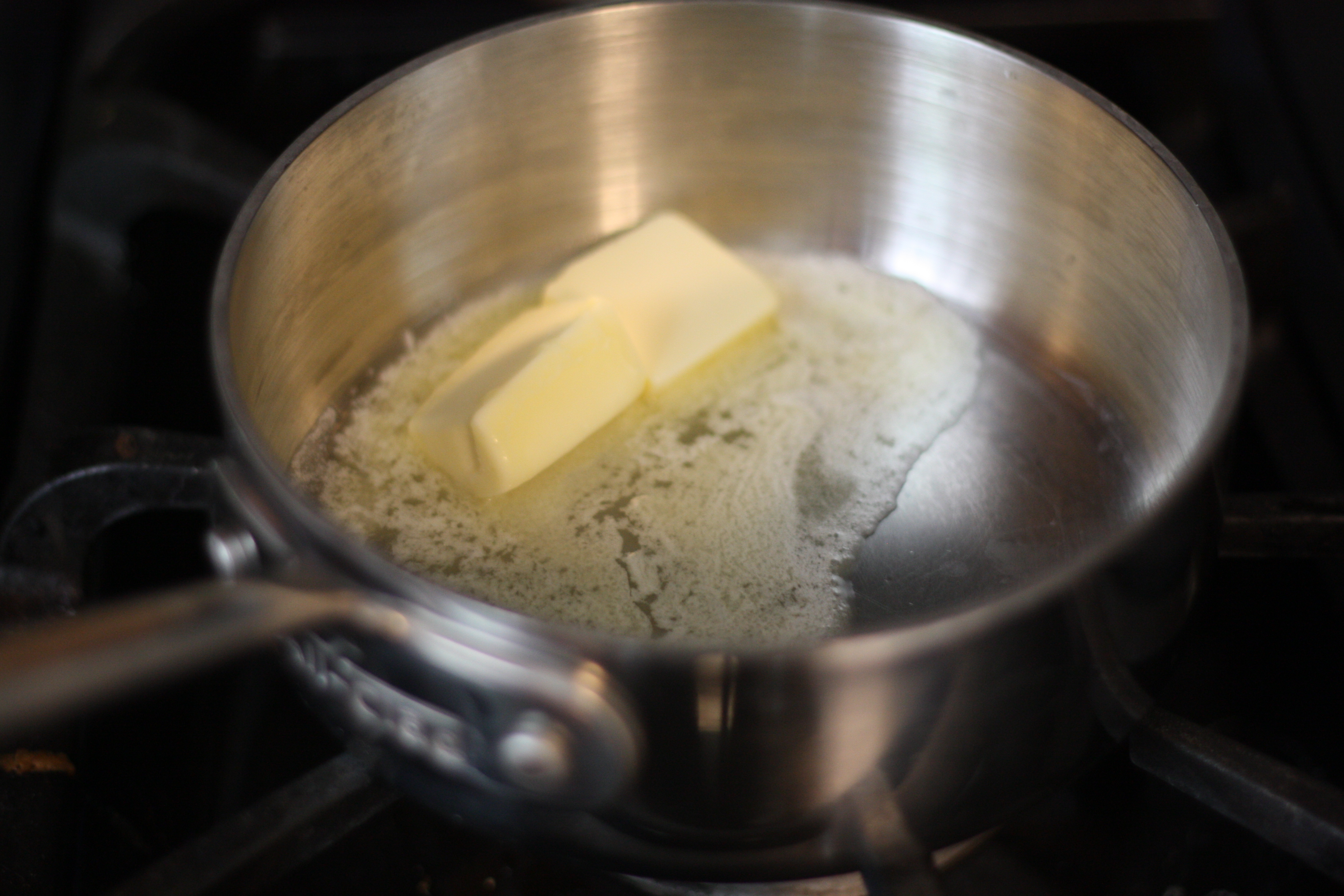
Over low heat, slowly melt 2 Tablespoons butter.

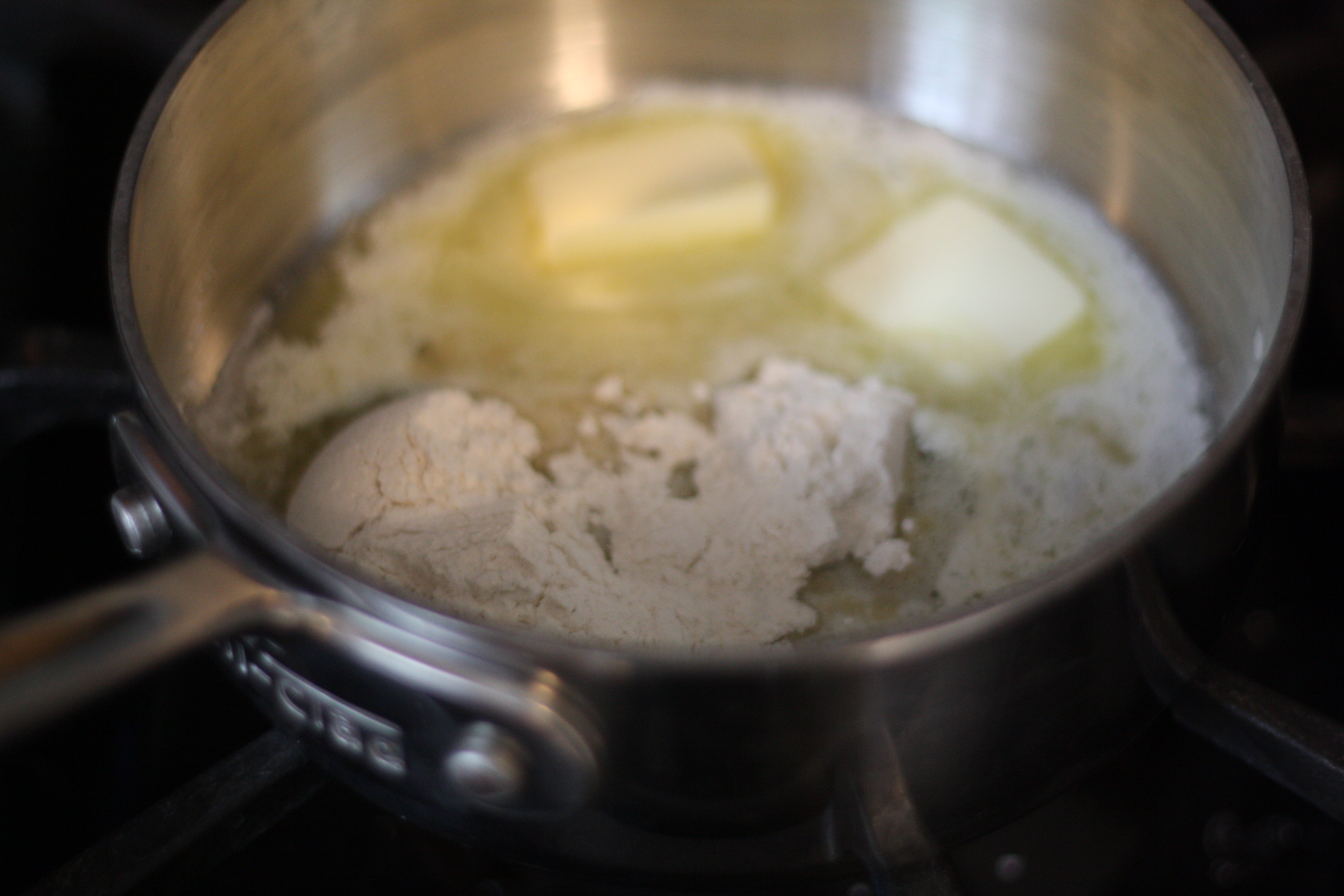
Once the butter has melted, add 2 Tablespoons of all-purpose flour.

Whisk to combine the melted butter and flour.

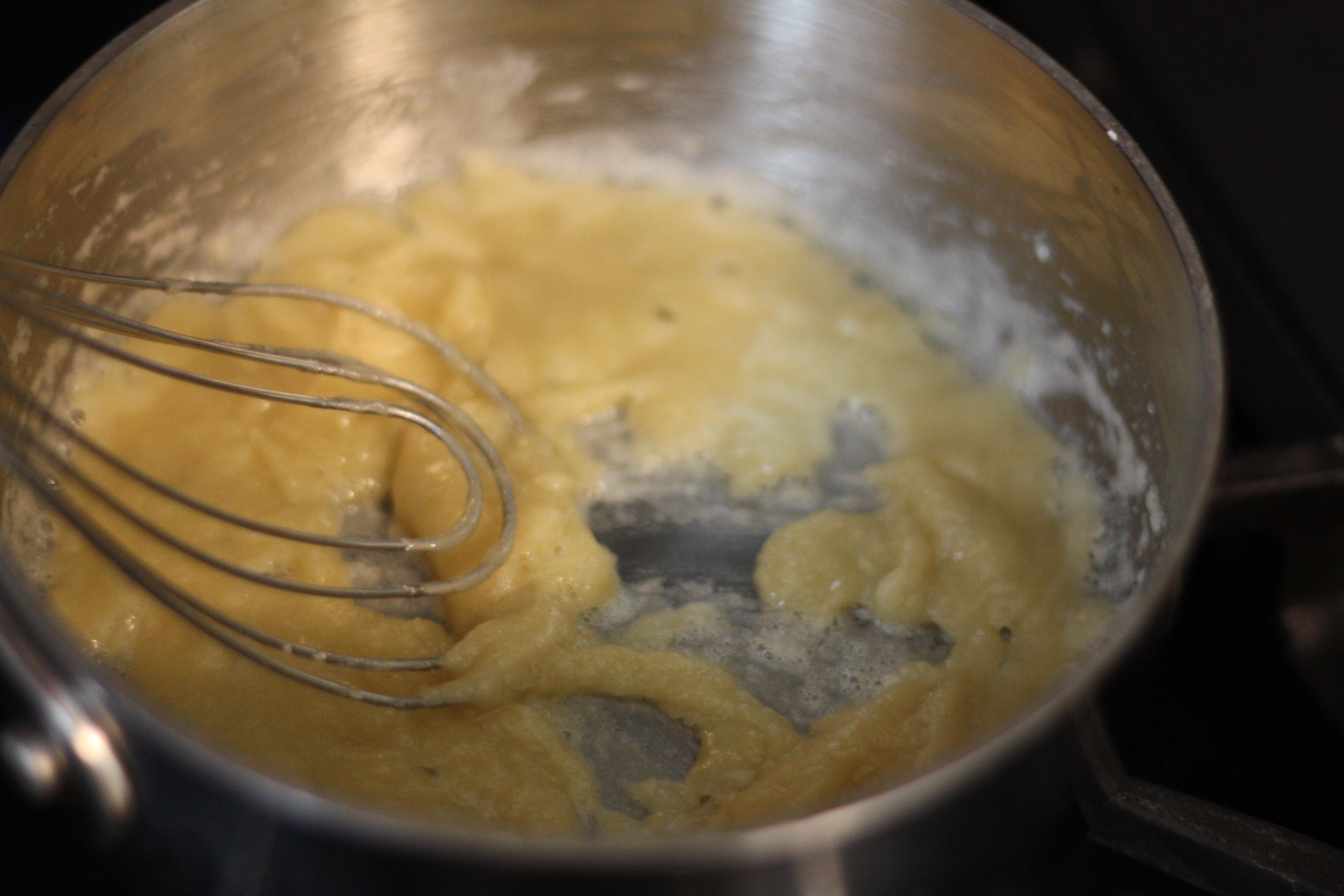
Continue whisking over medium-low heat for a few minutes to remove the raw-flour taste. The roux should have the consistency of a paste.

This procedure will produce a white roux. To produce a blond or brown roux, continue cooking until it begins to take on a darker color.

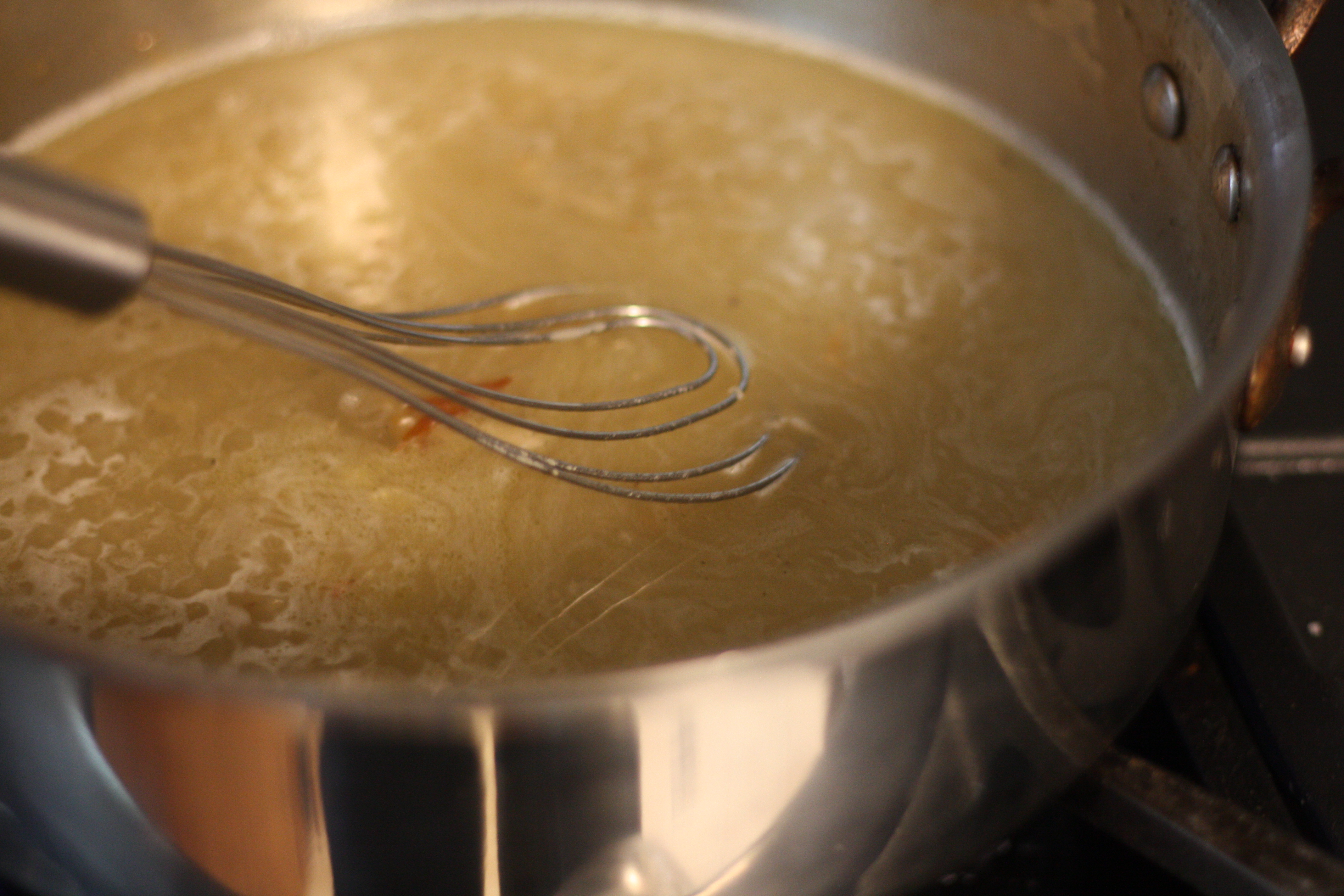
To thicken a liquid with your roux: A roux made with 2 Tbsp butter and 2 Tbsp flour is just about the right amount to thicken 1 cup of liquid, depending on your desired thickness. Bring your liquid to a simmer. Add some of your roux and whisk rapidly to combine. Allow it to simmer for a few minutes. The thickening power of a roux is activated by the simmering. If desired, add more roux and simmer for a few more minutes to gauge the thickness. If it’s not thick enough, add more roux. If too thick, add more liquid.

The Gourmand Mom

Good food, seasoned with a dash of life