A tumbleweed rolls across my kitchen floor. A strange man sits at the table, whistling ominously on a stout brown jug. I step into the room, spurs glimmering. A pair of wooden saloon doors swing closed behind me with a screech. (Funny…I don’t remember installing those doors.) I tip my hat and glare at my adversary.
**Flashback twenty or so years.** A gawky teenager, dressed in leggings with slouch socks and gleaming white faux-Keds, moves easily about the kitchen. Her side-pony sways with every movement. A well worn Better Homes and Gardens Dessert cookbook, circa 1973, sits open on the counter. Bolstered with confidence after the roaring success of the previous week’s Lemon Meringue Pie, she is busy preparing Baked Alaska, never pausing for a moment to consider what lie ahead.
My adversary stands before me, dressed in gleaming white. It snickers, taunting me. I stick my tongue out and make a sour face. My weapon is drawn.
Cyndi Lauder blares in the background as the eager teen approaches the open oven, her fluffy, white creation in hand. She pops it in the oven and dances awkwardly about the kitchen for a few minutes. The timer beeps. She bounces over to the oven, opens the door, and shrieks. Her siblings come running into the kitchen.
I belt out my battle cry and approach the snickering adversary. I take it in my hands and approach the piping hot oven. Not this time! Not this time! I place it in the oven and close the door.
The teen and her siblings stare in horror at the tray of melted ice cream. It looks nothing like the picture in the cookbook. A single tear falls from the teen’s hazel eyes.
After five eternal minutes, I open the oven and…

My Baked Alaska

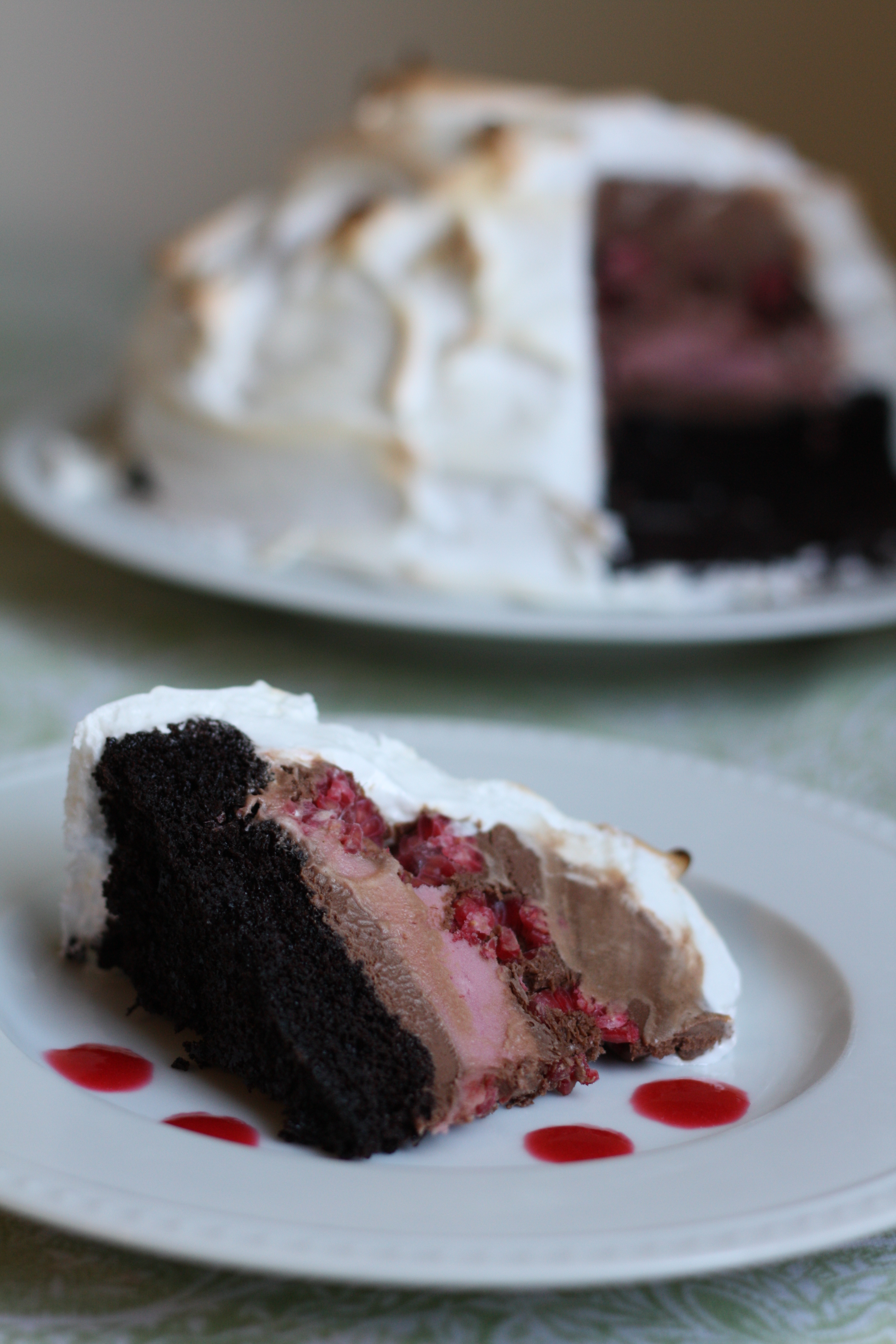
Dark Chocolate Raspberry Baked Alaska
Here’s how it’s done…
The Cake
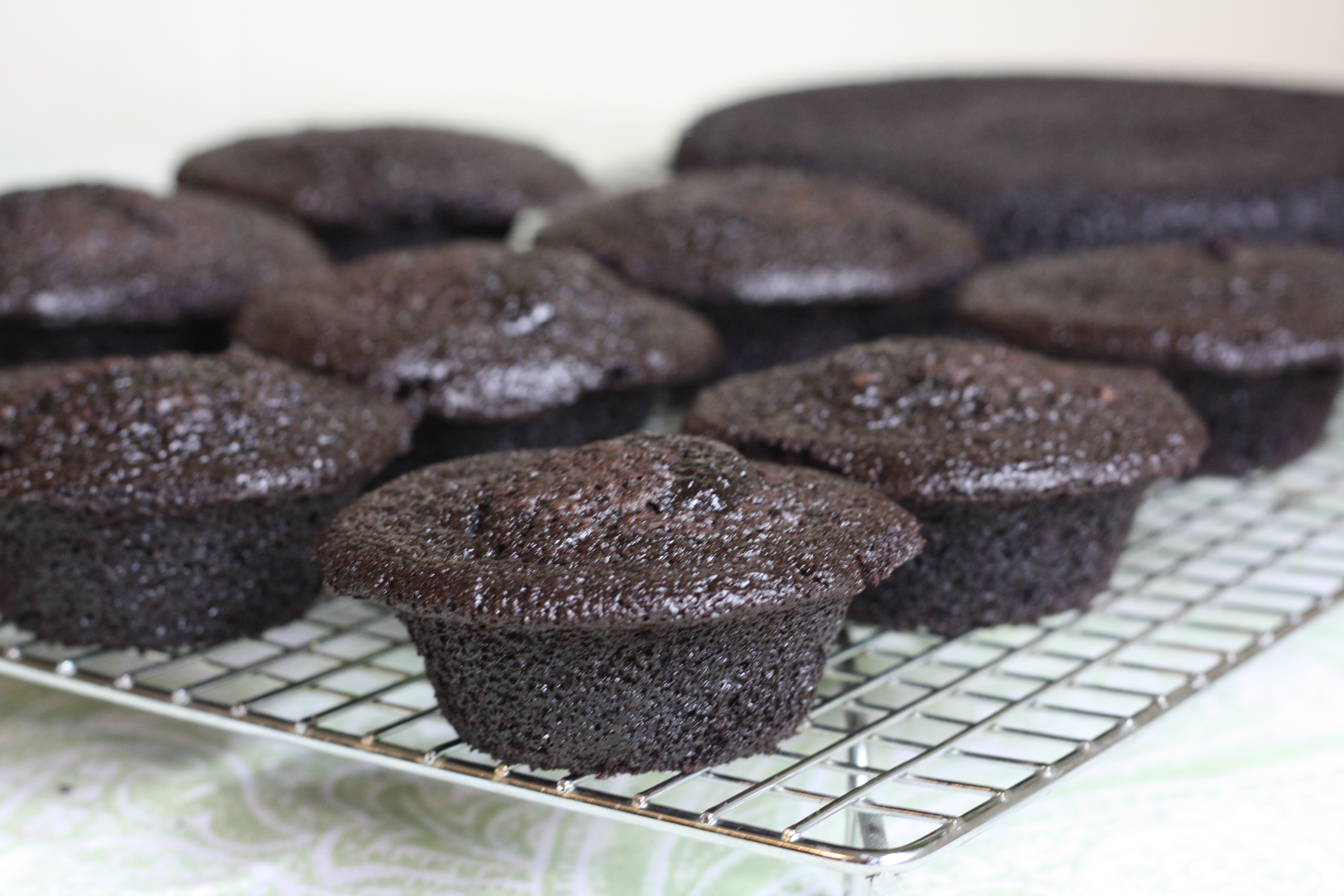
You can use just about any flavor or type of cake for the base of the Baked Alaska. A giant cookie or brownie base would probably work nicely too! I went searching for a dark chocolate cake recipe for my Baked Alaska. I landed upon a truly fantastic recipe from Hershey’s for Deep Dark Chocolate Cake. This is probably the best chocolate cake I’ve ever tasted. I will definitely be using this cake recipe for future birthday cakes! I made one 9 inch round cake for my base and several cupcakes for the kids to make their own mini Baked Alaskas.

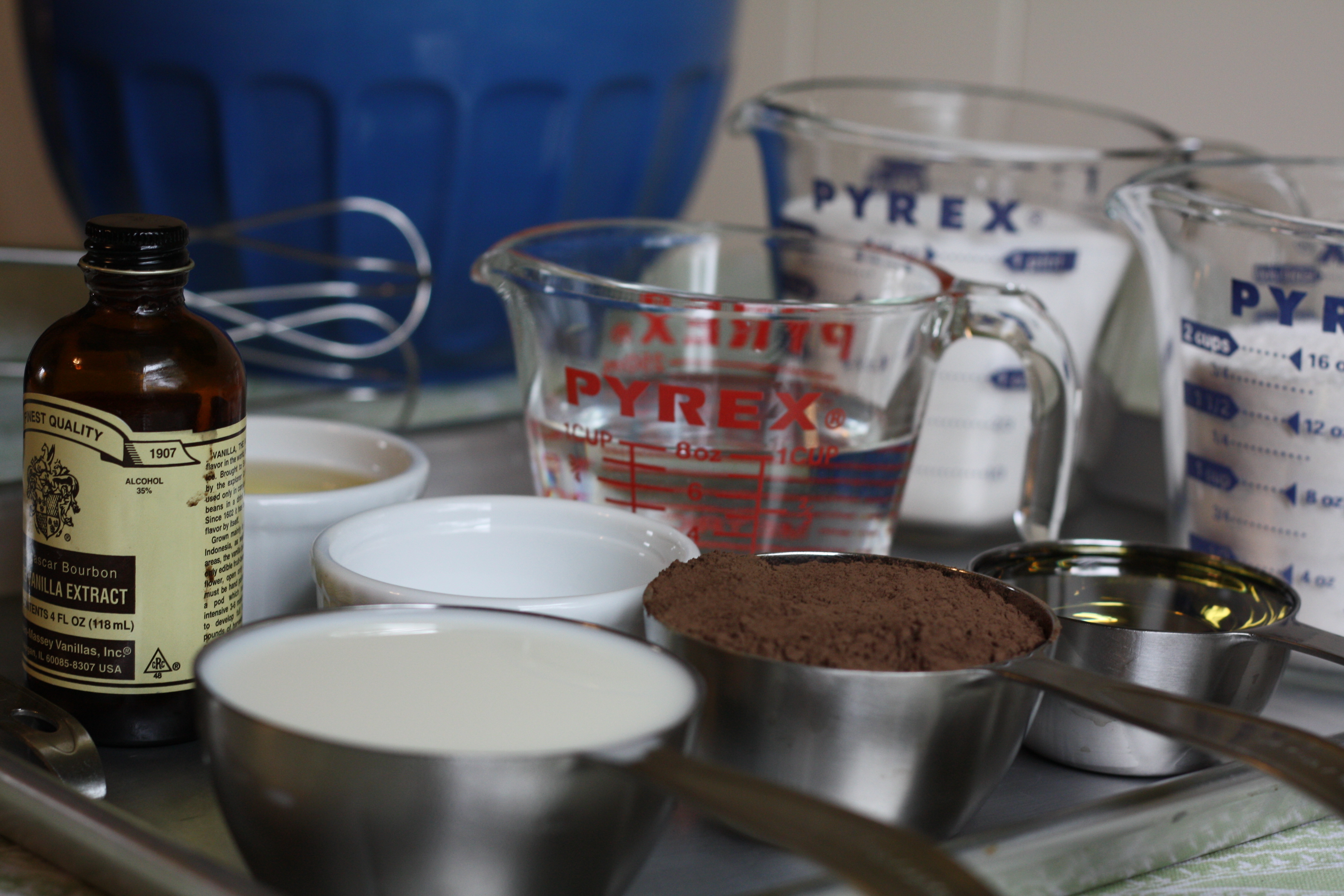
Mise en place - Everything in its place

Hershey's Deep Dark Chocolate Cake

Chocolatey Cake and Cupcakes
The Ice Cream
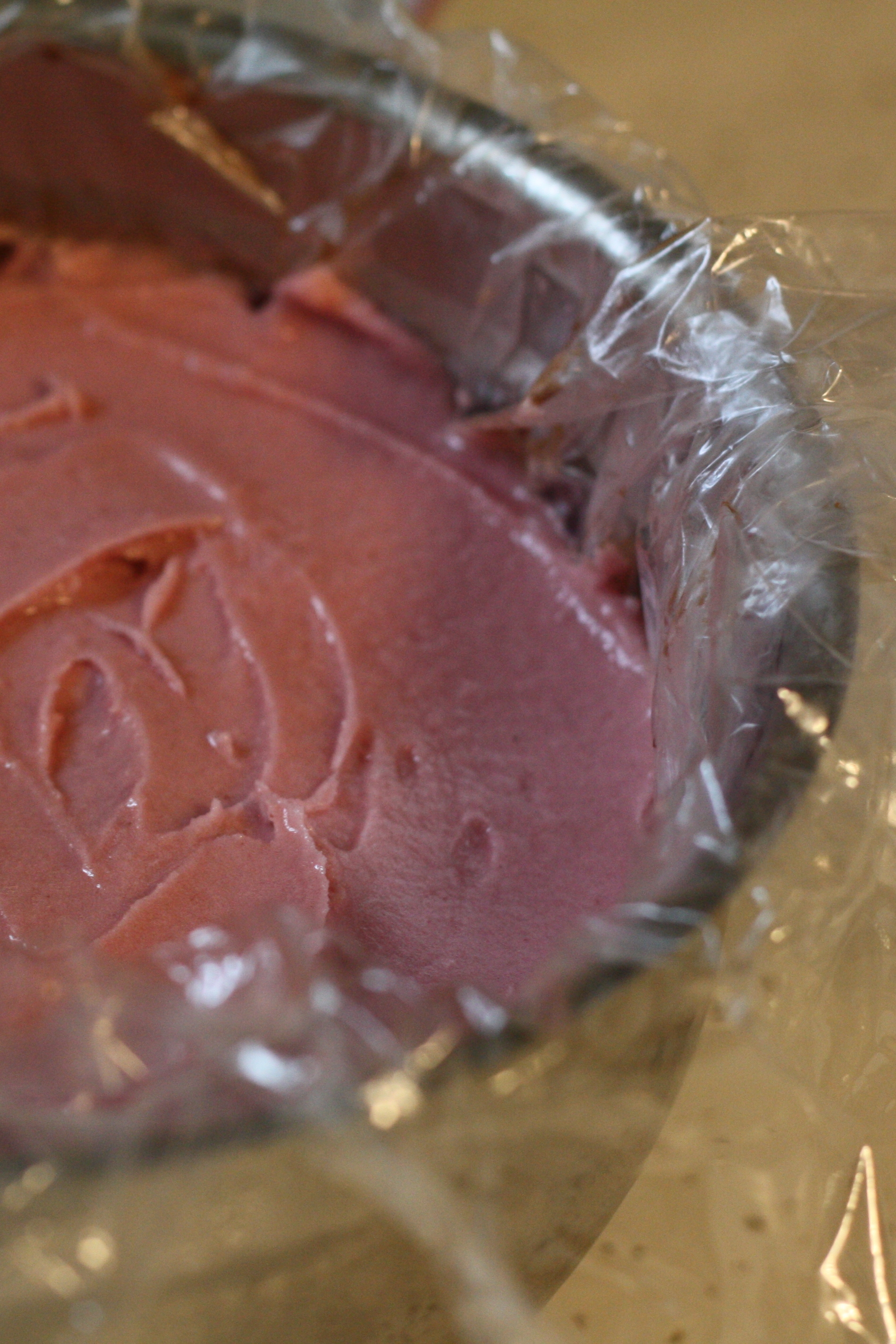
You can use any flavor(s) of ice cream in your Baked Alaska. To prepare the ice cream, spray the inside of a bowl with Pam or lightly coat with vegetable oil. Then, line the bowl with plastic wrap. This step will make it easier to remove the ice cream dome. Allow the ice cream to soften slightly. Then, spread the ice cream in an even layer on the bottom of the bowl, being certain to fill all gaps. Place the bowl in the freezer until the ice cream has refrozen. If using more than one flavor, freeze each layer before adding the next flavor. I layered dark chocolate ice cream with fresh raspberries, raspberry sorbet, and milk chocolate ice cream.

Raspberry Sorbet Layer
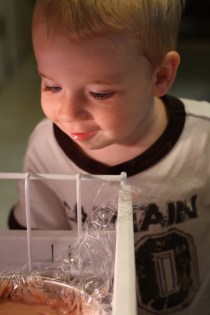
Waiting for the ice cream
The Meringue
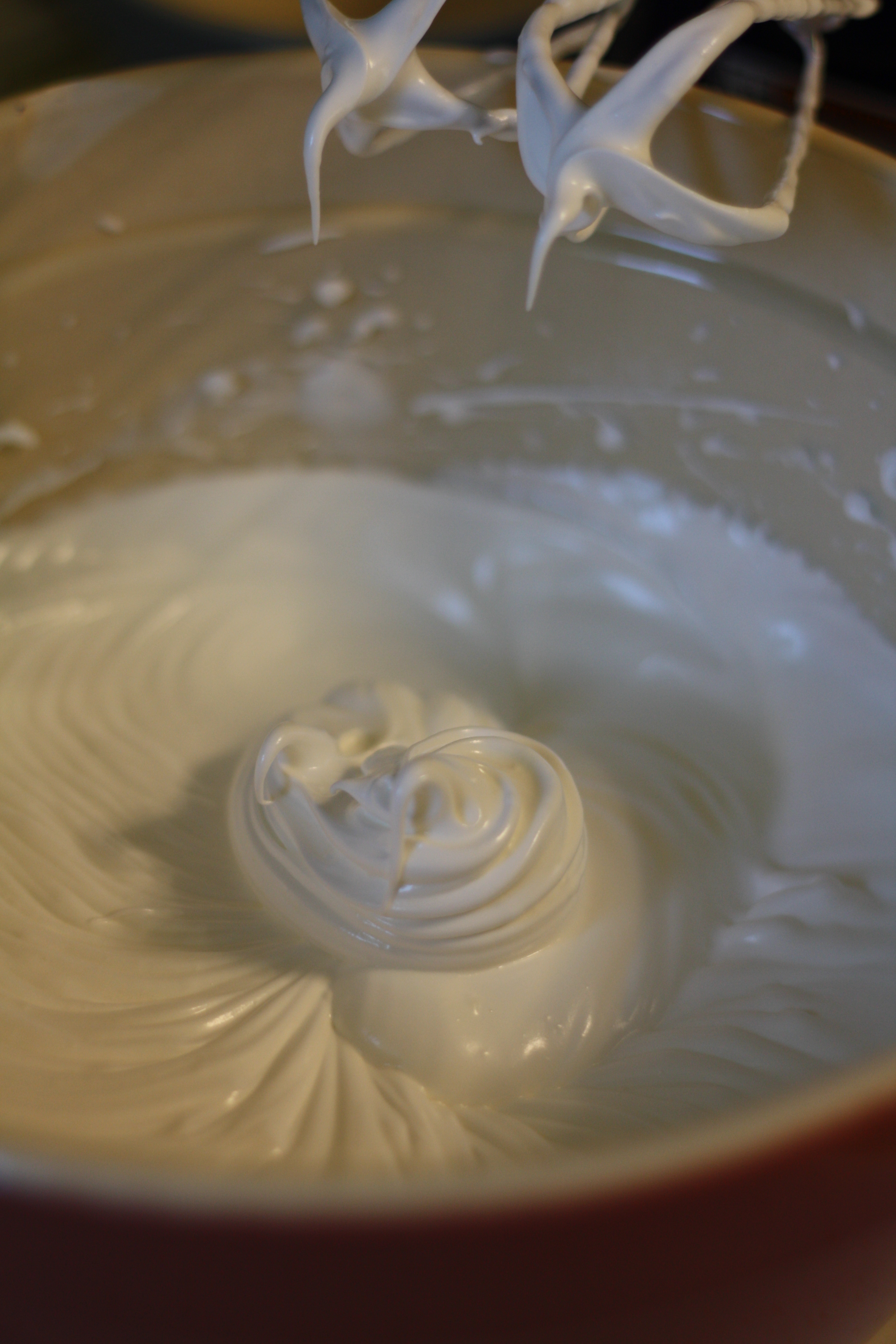
Meringue is a mixture of egg whites and sugar, beaten until thick and glossy. Cream of tartar is frequently added as a stabilizer, but is not absolutely necessary. Egg whites should be beaten to soft peaks before incorporating the sugar.
A few tips for a successful meringue:
- Bowl and whisk should be pristinely clean as even the slightest bit of residual fat can prevent the whites from developing.
- Stainless steel, glass, or ceramic bowls will all work well.
- Make sure that no trace of yolk enters the mix. Crack each egg into a ramekin or small bowl first, so if a yolk breaks, you won’t waste the whole batch.
- Allow the egg whites to come to room temperature before beating.
- Before beating, add 1/8 tsp of Cream of Tartar per egg white to help stabilize the whipped whites.
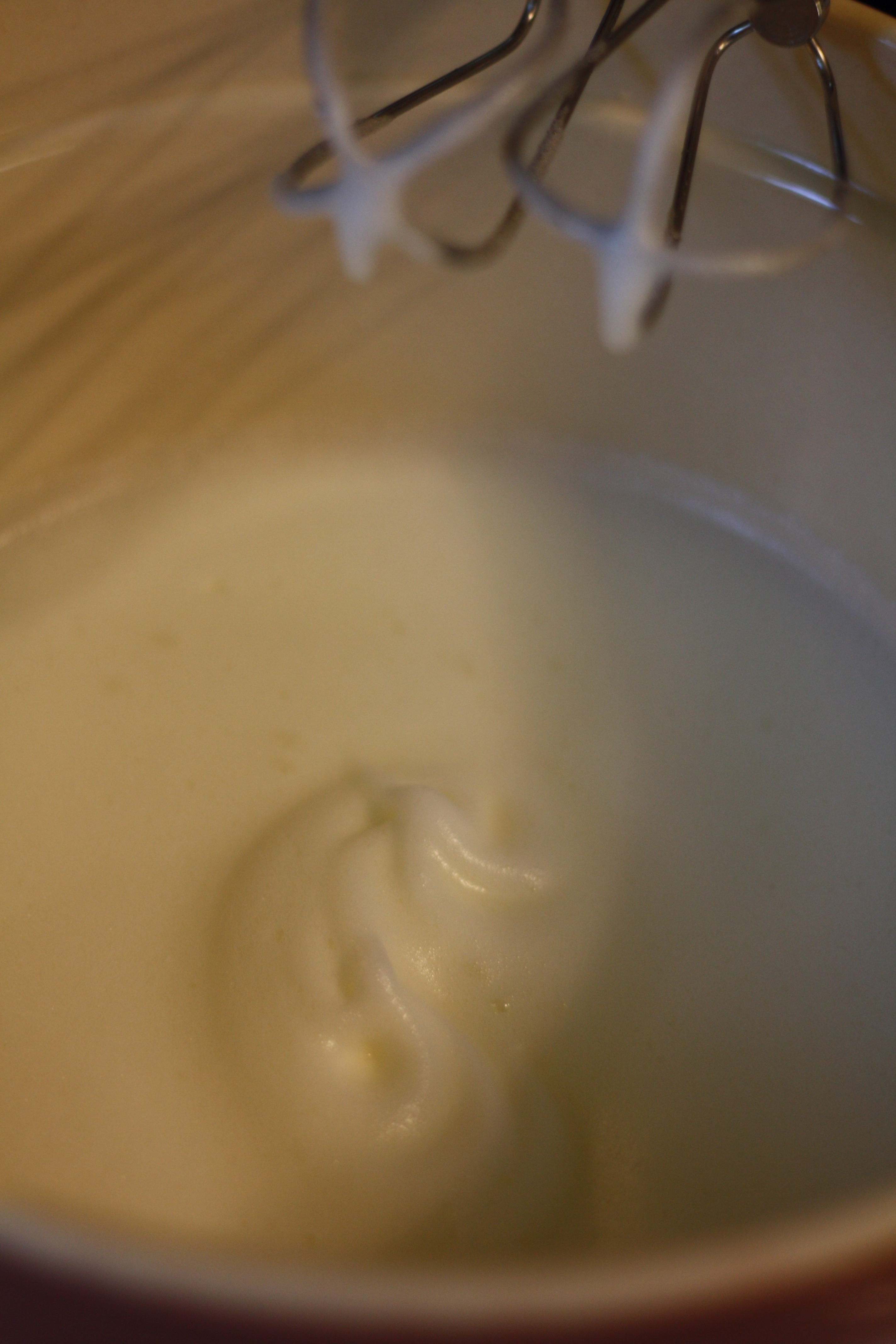
- Beat the egg whites until soft peaks begin to form.
- Use about (but no less than) 2 Tbsp of sugar per egg white.
- If possible, use superfine sugar as it will dissolve more easily into the egg whites.
- Gradually add sugar a spoonful at a time, until stiff peaks form. Stiff peaks will hold their shape. The meringue should be smooth and glossy.

Soft Peaks

Stiff Peaks
** I used 8 whites, 1 tsp cream of tartar, and 16 Tbsp sugar, which made enough meringue to thoroughly cover my large Baked Alaska and two of the kids’ Baked Alaska cupcakes.
The Assembly
Once the cake is baked and the ice cream is thoroughly frozen, carefully turn the bowl over and lower the ice cream dome on top of the cake. I scooped out a shallow bed for the ice cream dome to sit in, in the hopes that it would provide a better insulating seal for the meringue. This step may not be necessary, but it worked! Once the ice cream cake is assembled, allow it to freeze until very firm. I left mine in the freezer overnight. Once frozen, preheat the oven to 450 degrees. Prepare the meringue. Working quickly, coat the ice cream and the cake thoroughly in meringue, being careful to spread the meringue to every edge. You can use a knife or the back of a spoon to create decorative designs in your meringue.

Cake with a shallow bed for the ice cream

Cake with Ice Cream
The Final Baking
Bake on the lower rack of a 450 degree oven for 5-6 minutes until the exterior begins to brown.
Serve immediately or freeze until ready to serve. It holds well in the freezer.

Dark Chocolate Raspberry Baked Alaska with Raspberry Coulis
A few other notes and tips…
- Make sure your meringue thoroughly coats the ice cream and cake. This is the most important part (and probably the aspect which caused my failure so many years ago). The meringue is what insulates the ice cream from the heat.
- Make your ice cream dome with a smaller diameter than your cake. Most recipes don’t mention this, but I think it helps to prevent melting.
- Inspired by this link, shared by a friend, my kids made their own mini Baked Alaskas. I used extra batter from the cake to make a few cupcakes. Then, we scooped out the center and filled it with softened Raspberry Sorbet. They coated their Alaskas with the extra meringue. Then, I put them in the oven for 5 minutes at 450 degrees. Worked out great, just make sure you help your kids thoroughly cover the entire cupcake.
- I served my Baked Alaska with a Raspberry Coulis. A coulis, (pronounced koo-LEE) is simply a sauce made by pureeing fruit or vegetables and straining. For my sauce, I pureed a handful of raspberries with a Tbps of sugar. Then, I strained the puree and discarded the seeds.

Don't mess with this cowboy!
So, did anyone else try your own Baked Alaska?? I know at least one of you did and with grand success! Anyone else? Tell us how it went!


























 The Gourmand Mom